Why Skipping Your Weekly Money Check Makes Money Feel Scarier Than It Is?

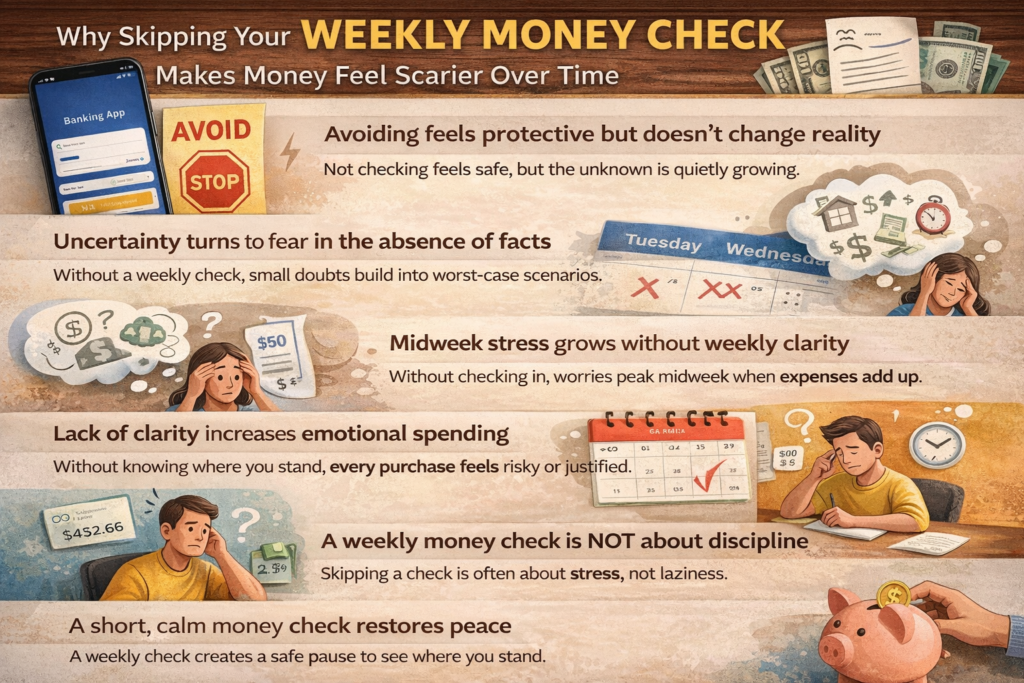
Weekly money check infographic showing how skipping a weekly money check increases financial fear, midweek stress, and uncertainty, and how weekly clarity restores calm and control
Weekly clarity reduces money fear

Weekly money check avoidance is one of the quiet reasons money starts to feel heavier than it actually is. Many people are not struggling because they lack income or discipline. They struggle because they stop looking. When money feels uncertain, the natural response is to avoid it, hoping the feeling will pass on its own.

Skipping a weekly money check does not make problems disappear. It makes them feel bigger, more emotional, and harder to understand. What starts as discomfort turns into fear, not because something went wrong, but because clarity went missing.

By the end of this article, you will understand why skipping a weekly money check increases financial fear and how simple weekly clarity makes money feel more manageable without stricter budgeting or constant tracking.

Why avoiding a weekly money check feels protective at first

When money feels tight or uncertain, skipping a weekly money check can feel like relief. Opening a banking app brings tension. Numbers feel loaded with meaning. Avoidance feels like control.

This reaction is human. Avoiding discomfort is how the brain tries to reduce stress in the short term. The problem is that money does not pause just because you stop looking at it.

A weekly money check is not avoided because people are careless. It is avoided because money carries emotional weight. Skipping the check feels safer than confronting uncertainty.

How skipping a weekly money check turns uncertainty into fear

Fear grows in the absence of information. When you skip a weekly money check, your brain fills in the blanks. It assumes worst-case scenarios. It imagines running out, being behind, or missing something important.

This is why money can feel scarier than it actually is. The numbers may still be manageable, but without context, the mind creates threat.

A weekly money check replaces imagination with facts. Without it, uncertainty compounds quietly until money feels overwhelming.

The connection between weekly money check avoidance and midweek stress

Skipping a weekly money check often makes money stress peak in the middle of the week. Early expenses clear. Paychecks feel distant. Without a check-in, there is no clear signal of whether the week is still okay.

This pattern explains why many people experience money stress midweek even when they are budgeting and earning consistently. The issue is not spending. It is the lack of weekly clarity.

A weekly money check breaks this cycle by providing reassurance before stress escalates.

Why skipping your weekly money check is not about laziness

People often blame themselves for skipping a weekly money check. They assume it means they are irresponsible or undisciplined. This belief creates shame and makes avoidance worse.

In reality, skipping a weekly money check is often a response to mental overload. By midweek, decision fatigue is high. Adding one more task feels heavy.

The problem is not effort. The problem is that money has not been given a calm, predictable place to be handled.

Paycheck timing makes weekly money check avoidance more dangerous

When expenses arrive before income, skipping a weekly money check becomes riskier. Bills, groceries, and automatic payments quietly reduce balances. Without a check-in, the gap feels larger than it actually is.

This is closely tied to budgeting between paychecks. Even when monthly math works, weekly timing creates emotional pressure.

A weekly money check shows what is left for the week, not just what is left for the month.

How skipping a weekly money check increases emotional spending

When clarity disappears, emotional spending often increases. Without knowing where you stand, every purchase feels risky or justified at the same time.

Some people overspend because they assume things are already bad. Others underspend because they fear making things worse. Both reactions come from the same place: missing information.

A weekly money check reduces emotional swings by anchoring decisions in reality.
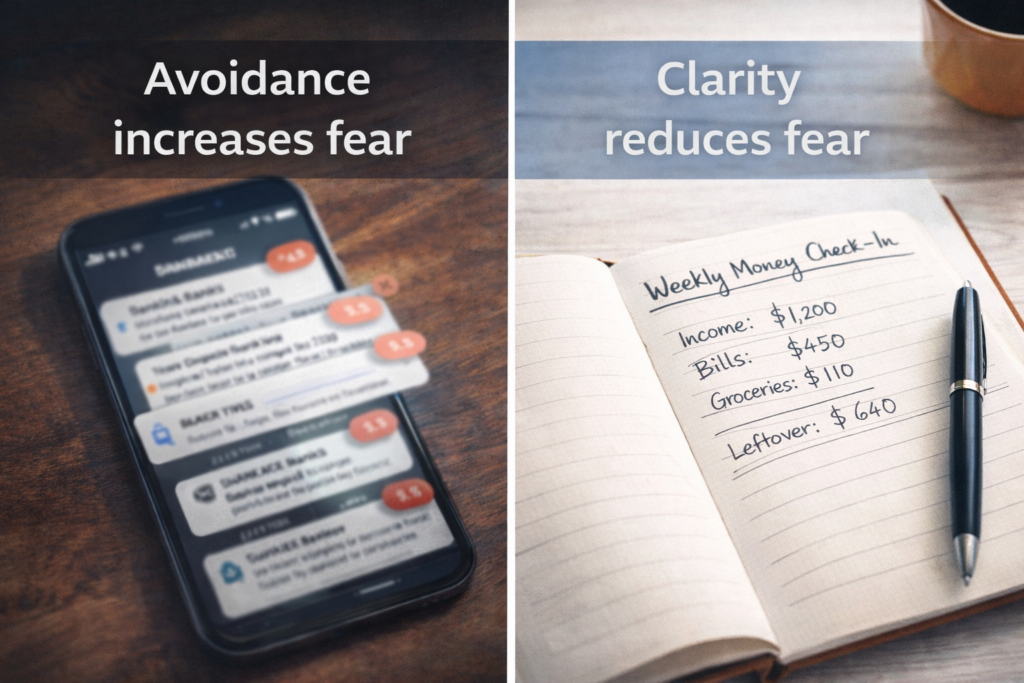
Weekly money check comparison showing avoidance versus clarity and how a weekly money check reduces fear and emotional spending
Avoiding money creates anxiety. Checking it creates calm.

A real-life example

Someone skips their weekly money check because work was stressful. On Wednesday, a routine grocery run feels tense. The amount is normal, but uncertainty makes it feel dangerous. When they finally check their account, they realize the week was manageable all along.

What the data says about financial uncertainty

According to the Federal Reserve, about 37 percent of U.S. adults would struggle to cover a $400 emergency expense without borrowing. This statistic highlights how fragile financial confidence can feel, even when day-to-day expenses are being managed.

Source: Federal Reserve – Economic Well-Being of U.S. Households

Why a weekly money check restores calm

A weekly money check creates a boundary around money. Instead of worrying all week, you choose one calm moment to look, assess, and adjust.

This habit shifts money from a background anxiety into a scheduled decision. Over time, fear fades because nothing is left to guess.

If you want a full explanation of how this habit works, this guide explains it step by step: weekly money check.

A simple tool that supports weekly clarity

Some people find it easier to stay consistent when everything lives in one place. The Daily Life Financial Planner – Complete Financial Management Bundle is designed to support calm weekly money checks without turning money into a daily mental burden.

This is not a budgeting system or tracking tool. It supports clarity, not control.

The role of a checking account buffer

Skipping a weekly money check often means not noticing how thin a checking account buffer has become. A small buffer absorbs timing stress and reduces fear.

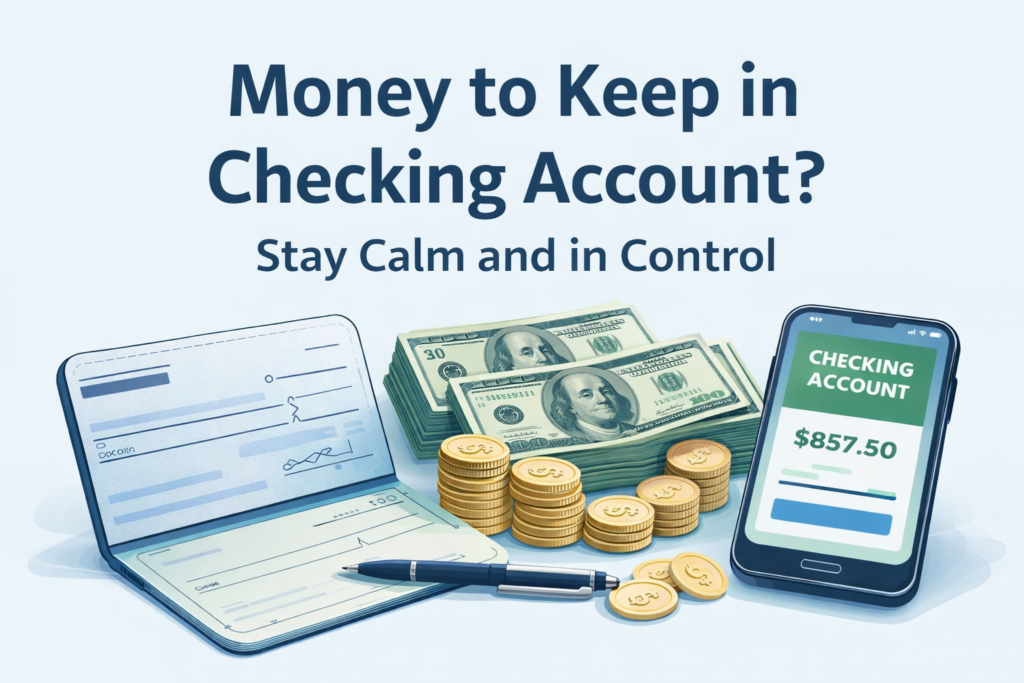
Knowing the right amount of money to keep in checking account makes weekly spending feel safer and more predictable.

Why the fear feels real even when the numbers are fine

One of the most confusing parts of financial anxiety is that it can feel intense even when nothing is technically wrong. Bills may be paid. Income may be stable. There may even be room in the account. Yet the fear feels real.

This happens because the brain does not respond to math alone. It responds to certainty. When there is no recent point of reassurance, the mind treats the situation as unresolved.

Money can feel unsafe not because it is unsafe, but because it has not been recently confirmed as safe.

The difference between knowing and assuming

There is a meaningful emotional difference between knowing where you stand and assuming where you stand. Knowing brings calm. Assuming invites stories.

When people skip regular reviews, assumptions tend to drift negative. The mind does not assume things are fine. It assumes risk.

This is not pessimism. It is survival instinct filling informational gaps.

Why this pattern repeats week after week

Many people notice this pattern repeating and treat each week as a separate failure. In reality, the cycle repeats because the system has not changed.

Relief arrives after payday. Tension builds midweek. Avoidance follows. The pattern resets.

Breaking the cycle does not require more discipline. It requires changing when reassurance happens.

How small clarity moments build confidence

Financial confidence is built through repeated moments of understanding. Each calm review teaches the nervous system that money can be faced safely.

Over time, the act of checking stops feeling threatening. It becomes neutral. That neutrality is what most people experience as confidence.

Why clarity often matters more than change

Many people try to fix money stress by changing behavior. They restrict spending, track harder, or punish themselves for mistakes.

Often, the missing piece is not change. It is understanding.

When understanding exists, behavior naturally adjusts.

Final thoughts on skipping your weekly money check

Weekly money check avoidance does not mean failure. It means uncertainty has taken the driver’s seat.

When you replace avoidance with a simple weekly check-in, money stops feeling scarier than it is.

Clarity does not remove challenges. It removes fear.

2 thoughts on “Why Skipping Your Weekly Money Check Makes Money Feel Scarier Than It Is?”

  1. Pingback: 10-Minute Weekly Money Check: Why Longer Reviews Increase Stress

  2. Pingback: 5 Reasons a Checking Account Balance Triggers Panic Before Bills Hit

Leave a Comment

Your email address will not be published. Required fields are marked *

Scroll to Top