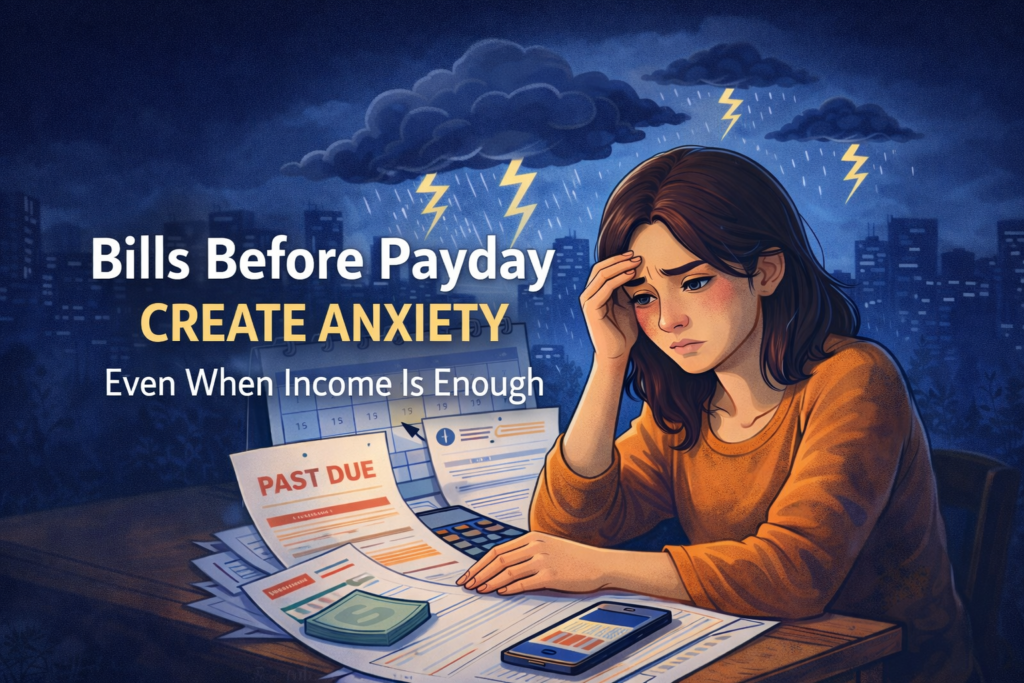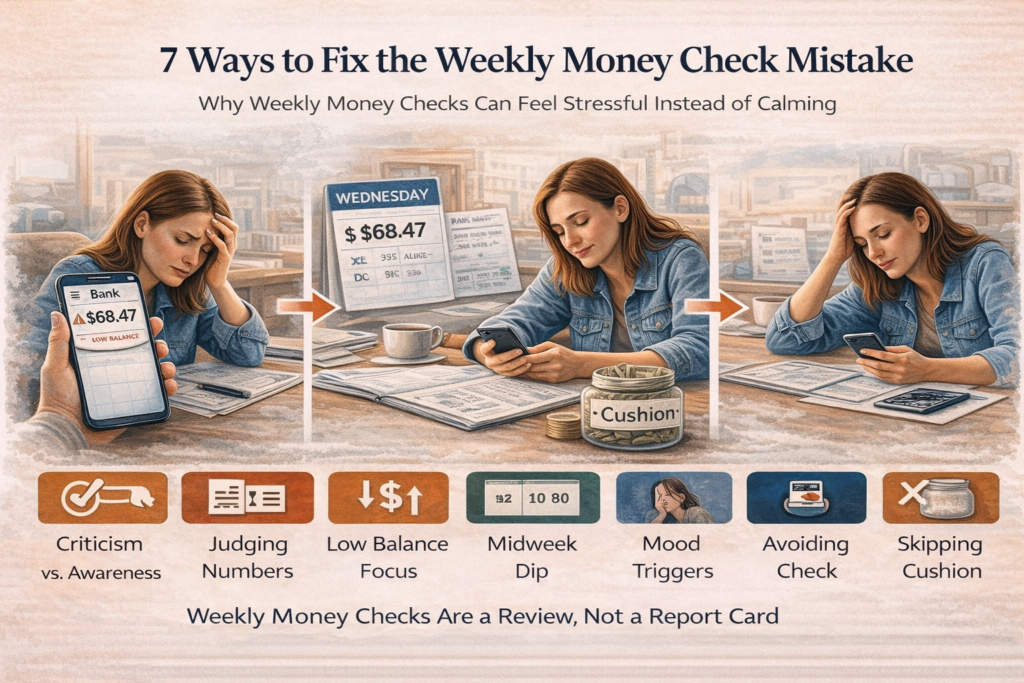
You sit down on Sunday evening to do your weekly money check. You open your banking app. You look at your checking balance. For a second, your stomach tightens. Maybe it is lower than you expected. Maybe groceries cost more this week. Nothing is late. Nothing is broken. But your mood shifts anyway. That emotional reaction often starts before any real financial problem appears.
This is where the weekly money check mistake quietly begins. Instead of using the weekly money check as a calm awareness habit, many people turn it into a judgment session. They look at the numbers and immediately decide they failed. The purpose of a weekly money check is clarity and reassurance. But when it becomes a scorecard, it creates stress instead of stability.
Most people do not realize they are making this weekly money check mistake. They assume tension means they lack discipline. In reality, the weekly money check is supposed to reduce anxiety, not increase it. The mistake is not spending money. The mistake is approaching the weekly review with pressure instead of curiosity.
If your weekly money check sometimes makes you feel worse instead of calmer, you are not doing money wrong. You may simply be making a small weekly money check mistake that shifts the emotional tone of the habit.
By the end of this article, you will understand the one weekly money check mistake that creates stress and how to turn your weekly money check into a calm, confidence building habit.
Why Logic or Income Alone Does Not Fix This
Even if your income is steady and your bills are covered, the weekly money check mistake can still create tension. Logic says everything is fine. But your brain reacts to what it sees in the moment. If your checking balance dipped after rent or subscriptions cleared, your body may respond before logic explains the full picture.
This emotional pattern connects with The Psychological Difference Between $100 and $500 in Your Checking Account. Visible balances influence how safe you feel. If your weekly money check becomes a place where you search for problems instead of clarity, it reinforces anxiety.
U.S. Money Insight
According to the Federal Reserve, 37% of U.S. adults would have difficulty covering a $400 emergency expense. When many households operate with thin margins, small balance changes during a weekly money check can feel larger than they are.
Cash-Flow Timing Insight
Housing costs account for roughly 34% of household spending in the United States, based on federal labor data. When a large bill clears early in the week, the visible dip during a weekly money check can trigger stress even when income remains steady.
The Timing Gap That Triggers the Mistake
The weekly money check mistake often happens in the middle of a paycheck cycle. Bills clear before the next deposit arrives. Your checking account temporarily shrinks. If you open your banking app at that moment and interpret the dip as failure, stress increases.
This connects with The Hidden Stress of Living Between Paychecks That Budgets Ignore. The gap between expenses and deposits is normal. The weekly money check is meant to acknowledge that rhythm. The mistake is treating a temporary dip as a personal flaw.
When Stress Peaks During the Week
Many people feel the most tension midweek. That is why Why Money Stress Peaks in the Middle of the Week resonates so strongly. Weekend spending posts first. The balance looks lower. The next paycheck feels far away.
If your weekly money check lands on one of those days and you approach it with judgment, the weekly money check mistake intensifies that stress. The goal is awareness, not punishment.
Why Traditional Budgeting Can Make This Worse
Traditional budgeting focuses on totals and categories. That helps with planning. But if you use your weekly money check to compare reality against a perfect plan, you may turn it into a performance review. That mindset feeds the weekly money check mistake.
This is why Budgeting Between Paychecks emphasizes flexibility and rhythm. The weekly money check should help you understand where you are, not judge where you think you should be.
Buffers, Visibility, and Reassurance
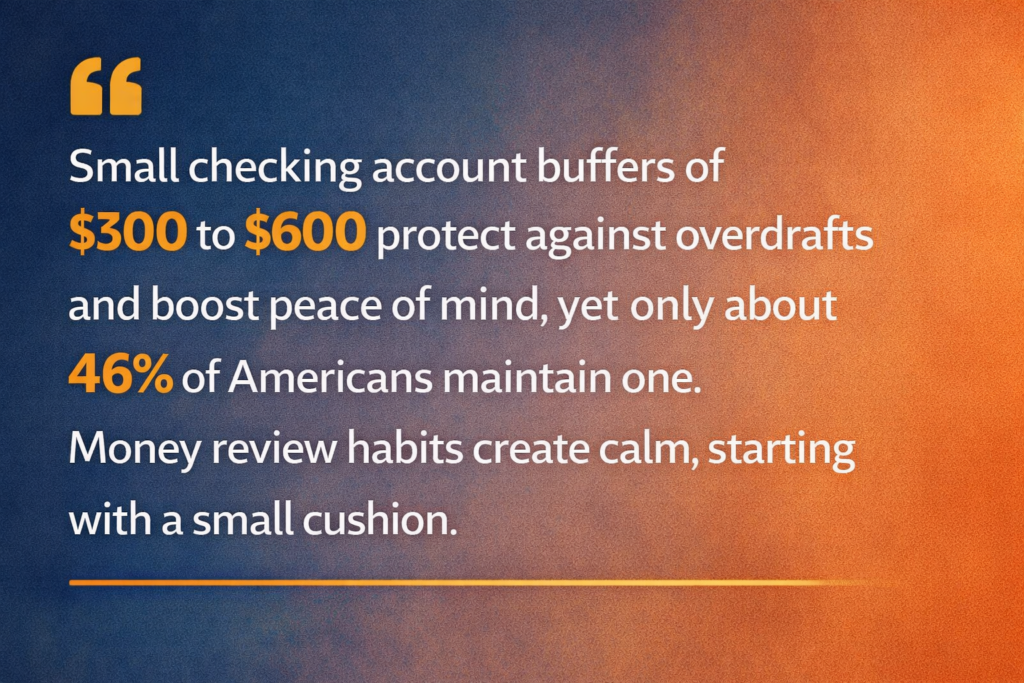
A small checking cushion softens the emotional edge of a weekly money check. As explained in How a Powerful Checking Account Cushion Changes Daily Spending Decisions, even a few hundred dollars of visible margin can shift your mindset.
When your weekly money check includes both awareness and a modest buffer, the experience feels calmer. The mistake fades because the purpose becomes reassurance instead of evaluation.
The Avoidance Loop
Sometimes the weekly money check mistake leads to avoidance. If reviewing your numbers feels uncomfortable, you may skip the habit entirely. As discussed in Why Skipping Your Weekly Money Check Makes Money Feel Scarier Than It Is, avoiding the numbers increases uncertainty.
The weekly money check works best when it remains steady and neutral. Skipping it gives your imagination space to create worst case scenarios.

Maria used to dread Sunday evenings because her weekly money check felt like a test. If she spent extra on groceries, she felt guilty. After shifting her mindset and using the weekly money check simply to review upcoming bills and confirm her cushion, her stress dropped. The numbers did not change dramatically. Her approach did.
Weekly Reassurance vs Monthly Planning
Monthly planning provides structure. The weekly money check provides emotional stability. When you treat your weekly money check as a calm review instead of a verdict, you build confidence. You see patterns. You adjust gently. You feel informed rather than judged.
If staying consistent feels difficult when life gets busy, the Daily Life Financial Planner – Complete Financial Management Bundle can help. It is a tool that helps people stay consistent when life gets busy and turns the weekly money check into a simple, steady habit.
Frequently Asked Questions
What is the weekly money check mistake?
The weekly money check mistake is using the habit as a judgment tool instead of a clarity tool.
How long should a weekly money check take?
It can take 10 to 15 minutes. The goal is awareness, not perfection.
What if I overspent?
Overspending occasionally is normal. The weekly money check is a place to notice patterns and adjust gently.
Quick Reflection
- Do you approach your weekly money check with curiosity or criticism?
- When during the week does it feel most stressful?
- How could a small cushion change your mindset?
Final Thoughts
The weekly money check mistake that creates stress is turning awareness into judgment. A weekly money check is meant to provide calm, rhythm, and reassurance. When you remove pressure and focus on visibility, the weekly money check becomes a steady habit that builds confidence instead of anxiety.