It is a regular weekday evening. Dinner is done. You open your bank app before bed and pause for a second.
This shows up a lot for people who check their balance and feel a small knot in their chest. If you are dealing with checking account buffer stress, you are not alone. This is common.
WHAT THIS PROBLEM IS
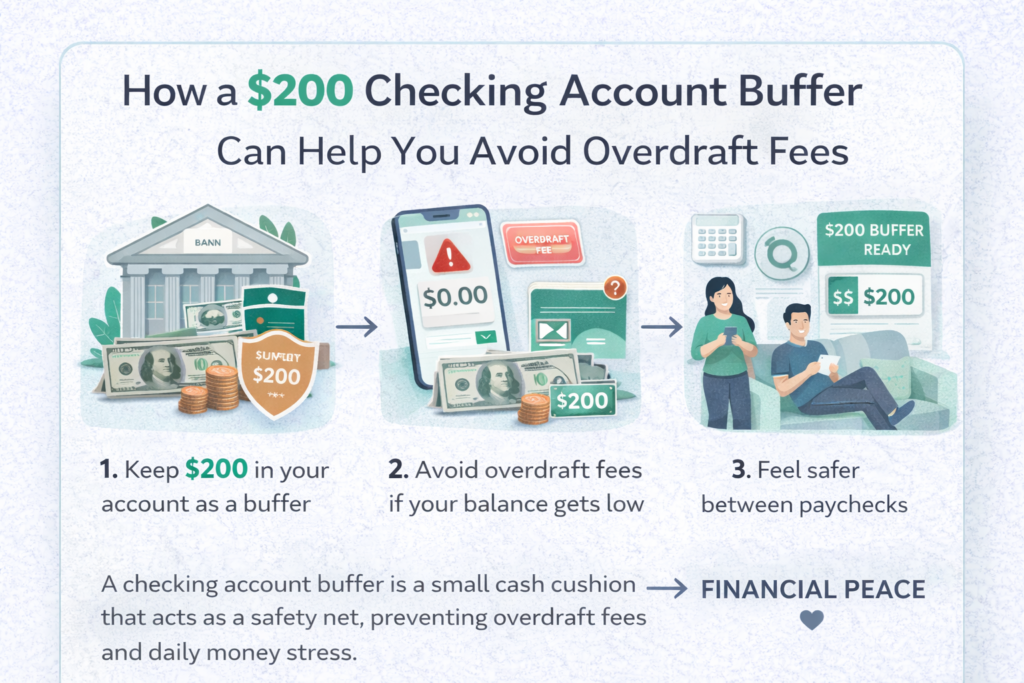
A checking account buffer is a small amount of money you leave in your checking account at all times. It is not savings. It is not extra money for fun. It is a safety layer.
The problem is that many people run their checking account down to zero or close to it between paychecks. Money comes in. Bills go out. Groceries happen. Gas happens. The balance drops lower and lower until one small charge can push it negative.
This is not because someone is bad with money. It usually happens because the checking account has no buffer.
Without a buffer, every purchase feels risky. Without a buffer, timing matters too much. One bill posting early or one forgotten subscription can cause a mess.
WHY IT MATTERS IN REAL LIFE
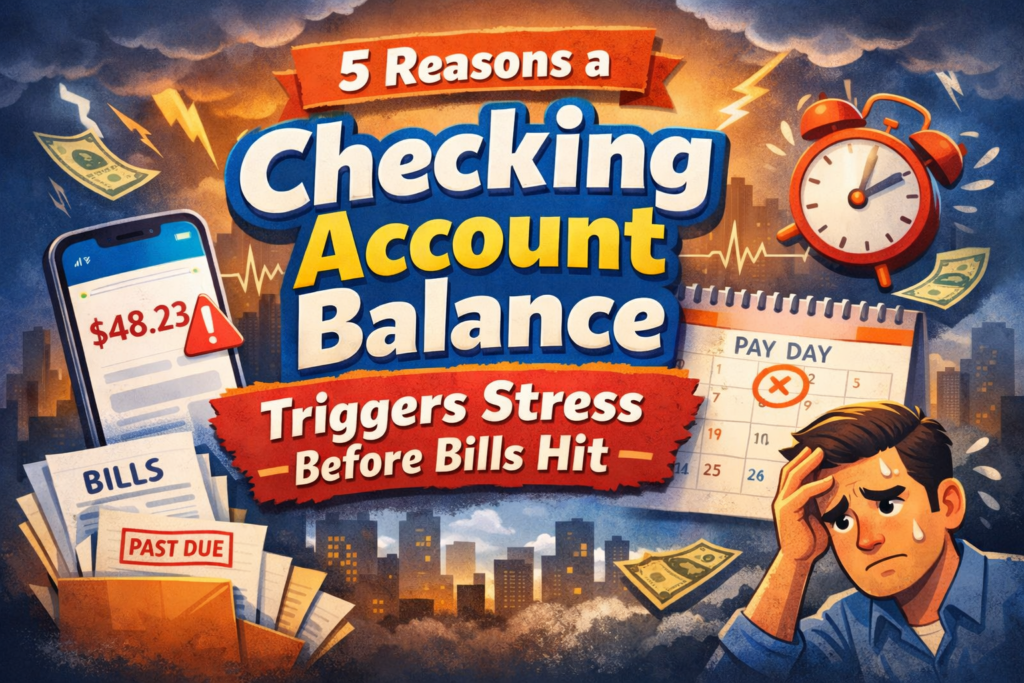
This matters when you are standing in line at the grocery store. You look at the total and think about your balance. You wonder if the gas charge from earlier posted yet. You hesitate before tapping your card.
That pause is the quiet stress moment. A checking account buffer removes that pause. It gives you space between your life and your balance.
Without that space, every normal expense feels like a decision. That stress builds over time.
According to NerdWallet, the average overdraft fee in the U.S. is about $35 per transaction. That means one small mistake can cost the same as a full tank of gas for some people. Source: NerdWallet
The Federal Reserve reports that many Americans would struggle to cover a small unexpected expense without stress. That tells us this is not a personal failure. It is a system problem. Source: Federal Reserve
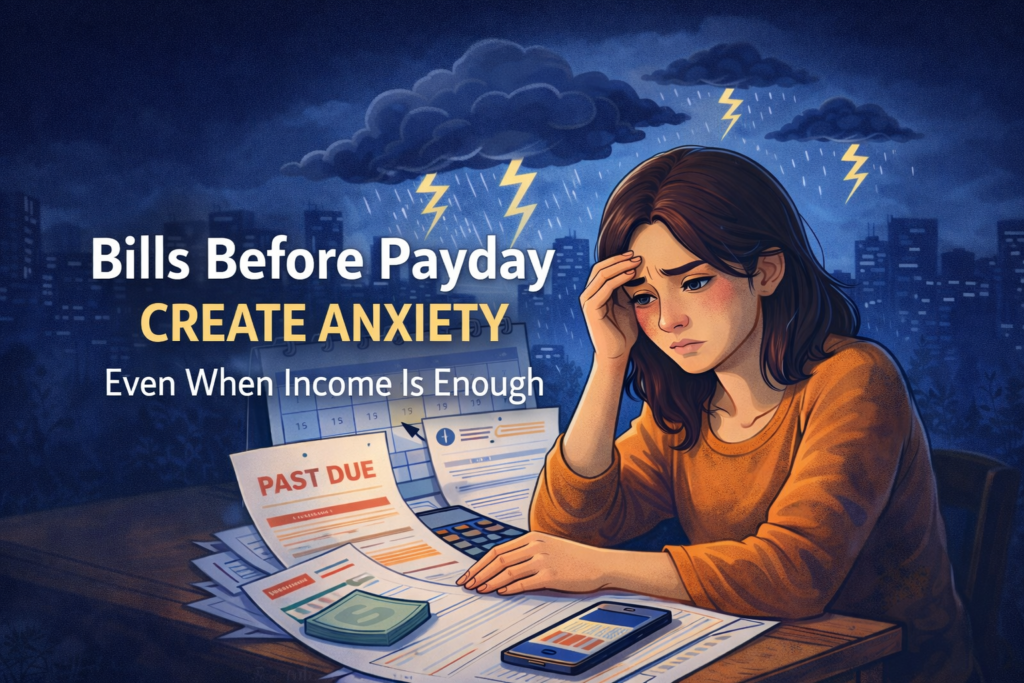
When checking accounts run too tight, stress shows up even on good days.
HOW TO HANDLE IT SIMPLY
You only need one small action. Pick one number that becomes your checking account buffer.
For many people, that number is between $100 and $300. Not because it is magic. Because it covers small timing issues.
Here is how to do it in a simple way. First, wait until a paycheck comes in. Next, look at your balance after your main bills are paid. Then choose a small amount to stop spending.
That amount stays in the account. You act like it does not exist. You do not touch it for groceries. You do not touch it for gas. It just sits there.
This is not about saving fast. This is about slowing the fall to zero.
Over time, that buffer turns into protection. If your balance used to hit $5 before payday and now it stops at $150, you removed most overdraft risk.
That is the money result. No new income. No complex budget. Just one line you do not cross.
I see this work best when people keep it boring and consistent. This is not a discipline problem. It is a setup problem.
WHAT HAPPENS IF IT IS IGNORED
When there is no checking account buffer, the same stress repeats. Every month.
You watch the calendar instead of your life. You delay purchases that are normal. You feel behind even when you are doing your best.
Overdraft fees pop up randomly. You move money between accounts to fix mistakes.
Nothing fully breaks. But nothing feels calm either.
That low-level stress adds up. Not because you failed. Because the system has no cushion.
HOW THIS SMALL ACTION LEADS TO REAL RELIEF
A checking account buffer works because it changes the math. If your account never drops below your buffer, surprise charges stop hurting.
A $12 subscription no longer causes panic. A gas charge posting late no longer causes a negative balance. You stop paying $35 fees for $5 mistakes.
According to the Consumer Financial Protection Bureau, overdraft fees can add up to hundreds of dollars a year for households that live close to zero. That is money that could have stayed with you. Source: CFPB
This is why consistency matters more than perfection. You do not need the perfect number. You need a number you respect.
Even a small buffer changes how money feels.
PERSONAL HUMAN REMINDERS
I see this pattern again and again with normal working adults. This is common.
You are not bad with money. You do not need to fix everything at once. You just need one calmer floor.
Consistency beats perfection here. Missing once does not ruin it. Going back to the buffer is what counts.
ENDING THOUGHT
If money feels loud in your head, a checking account buffer can quiet it. Not by adding pressure. By removing surprise.
You are not behind. You are learning how to build small systems that support your life.
If you want help staying consistent when life gets busy, a simple planner can support this habit without turning it into a chore.
Daily Life Financial Planner – Complete Financial Management Bundle is a tool that helps people stay consistent when life gets busy.
You can also explore more simple systems here: easy weekend side income.
Slow progress is still progress. Keep it simple. Keep it kind.
That is how money stress gets lighter.

Pingback: Money to Keep in Checking Account for Peace (5 Simple Rules)
Pingback: Budgeting Between Paychecks: 7 Simple Ways to Stop Feeling Broke
Pingback: 7 Ways to Avoid Overdraft Fees Without Watching Your Account All Day