Many people do not panic at the exact moment a bill hits their checking account. Instead, stress around their checking account balance shows up days earlier, quietly and gradually. It appears when they open their banking app and notice a checking account balance that looks lower than usual. Nothing bad has happened yet, but the body reacts anyway. The stress around a checking account balance comes before the event, not after it.
They open their bank app expecting reassurance about their checking account balance. Instead, they see a checking account balance that feels too close to the edge. Their chest tightens, their thoughts jump ahead, and their mood shifts. Even if payday is coming soon, the checking account balance still feels unsafe. The body reacts as if danger is already present in the checking account balance.
This reaction is not about poor money habits or lack of intelligence. It is not about being irresponsible or careless with a checking account balance. It is about uncertainty and how the human brain processes risk. When clarity around a checking account balance disappears, the brain fills the gap with fear. That response to a checking account balance is human, not a personal failure.
By the end of this article, you will understand why a checking account balance can feel stressful even when nothing is technically wrong, and why timing gaps in a checking account balance often matter more than income or totals when it comes to feeling calm.
A real-life example
Someone earns enough to cover their bills and live comfortably. Their rent clears several days before payday every month. During that window, their checking account balance drops lower than they like. They stop buying small things and delay routine purchases because the checking account balance feels fragile. Stress slowly builds even though nothing has actually gone wrong with the checking account balance.
When they finally check their checking account balance again, everything is still fine. The bills cleared exactly as planned. There was no emergency and no mistake in the checking account balance. The stress they carried for days did not come from lack of money. It came from not knowing and not trusting their checking account balance.
Why your checking account feels different
Your checking account is not just another account on a screen. It is where daily life happens in real time. Groceries, gas, rent, utilities, subscriptions, and small surprises all flow through your checking account balance. Because of this, your brain treats the checking account balance differently than savings. It becomes a signal of immediate safety.
When the checking account balance drops, the brain does not think logically. It does not calculate future paychecks or long-term averages. It focuses on the present moment and asks whether you are safe right now based on the checking account balance. That is why the emotional reaction to a checking account balance feels so fast and so strong. Logic arrives later, if at all.
This is why knowing the money to keep in checking account for real life calm matters so deeply. That number protects your checking account balance. It gives your brain room to breathe. It turns the checking account balance from a threat signal into a stability signal.
Why weekly reassurance matters more than monthly planning
Monthly planning helps with big-picture decisions. It answers questions about long-term goals and future expenses. But it does very little to calm daily stress around a checking account balance. The brain needs reassurance about the checking account balance more often than once a month. Without it, stress quietly builds.
When reassurance comes too late, the brain assumes the worst. If several days pass without confirmation that the checking account balance is still okay, the mind fills the silence with imagined problems. This happens even when the checking account balance technically works. Emotion reacts faster than reason.
Weekly reassurance works because it reduces the time spent guessing about the checking account balance. It shortens the window where fear can grow. It keeps the brain grounded in reality instead of imagination. That is why small, regular check-ins with your checking account balance matter more than perfect plans.
Cash-Flow Timing Stress
Research from the U.S. Census Bureau shows that many American households experience timing mismatches between income and expenses during the month. These timing gaps make a checking account balance feel unsafe even when annual income is stable.
Source: U.S. Census Bureau
The emotional cost of guessing instead of knowing
When money feels uncertain, many people stop checking their checking account balance. Avoidance feels protective because looking feels risky. But avoiding information forces the brain to guess about the checking account balance. Guessing creates stress because the mind rarely assumes best-case outcomes. It imagines problems instead.
The longer uncertainty around a checking account balance lasts, the heavier it feels. Even small expenses start to feel dangerous. The brain treats every purchase as a potential mistake because the checking account balance feels unclear. This emotional cost is far higher than the cost of looking.
This is why skipping your weekly money check makes money feel scarier than it is. Knowing the truth about your checking account balance, even when it is imperfect, is calmer than guessing.
U.S. Money Stress Reality
According to the American Psychological Association, money remains the top source of stress for U.S. adults. Uncertainty around a checking account balance plays a major role in that stress.
How bills before payday trigger uncertainty
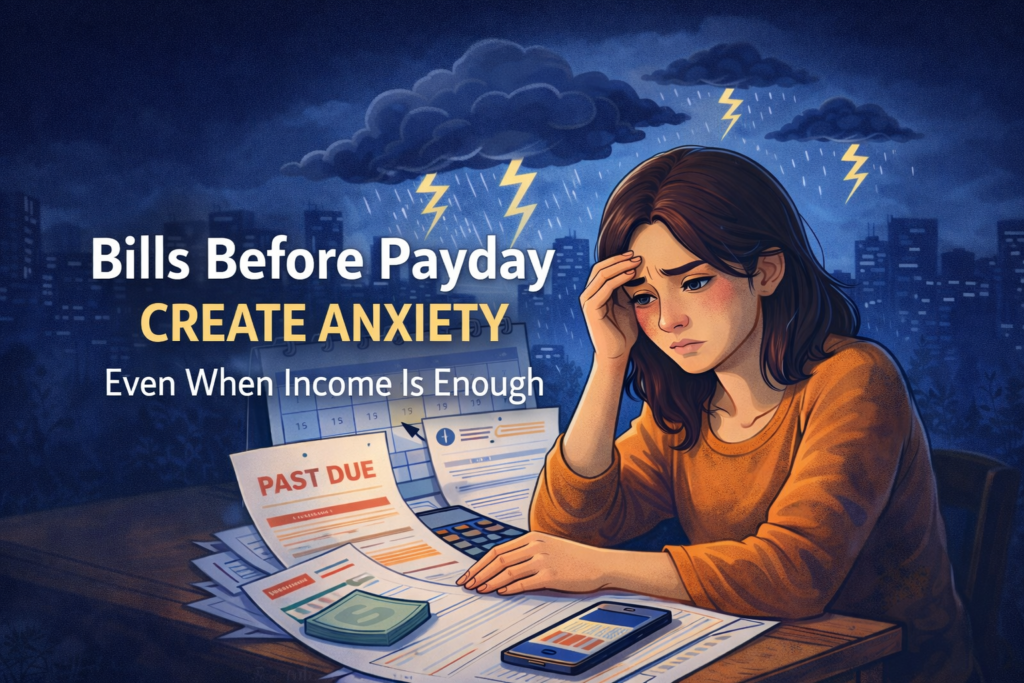
Bills before payday create a timing gap where money leaves the checking account balance before reassurance arrives. During this window, the brain loses context. It cannot see the full picture clearly. Fear grows because the checking account balance feels exposed.
Even when income is enough, timing still matters. The brain responds to what it sees today in the checking account balance, not what will arrive later. This is why bills that arrive early feel heavier.
This is exactly how bills before payday create anxiety even when income is enough. The stress comes from the gap in the checking account balance, not the numbers.
Why overdraft memories make panic arrive early
If someone has ever overdrafted, the brain remembers the experience vividly. The fee, the surprise, and the frustration get attached to the checking account balance. Those memories teach the brain to react sooner next time.
When the checking account balance drops, the brain connects the present moment to past stress. It reacts early to stay safe. This is why panic can appear even before a bill hits the checking account balance.
Learning how to avoid overdraft fees without watching your account all day reduces this fear because it restores trust in the checking account balance.
The role of a checking account buffer
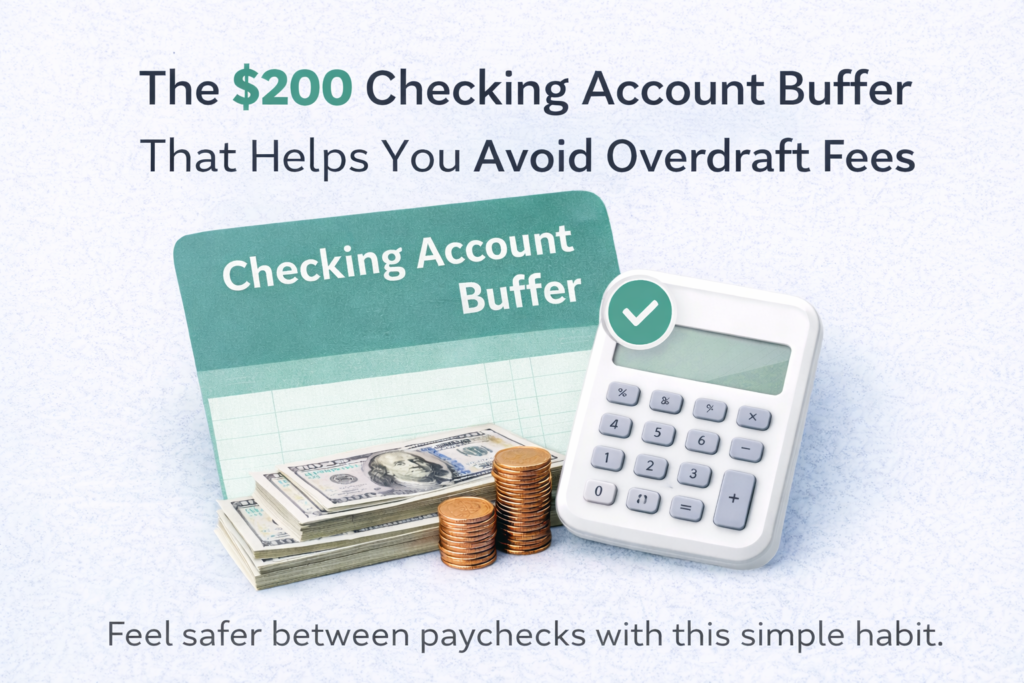
A checking account buffer is money that stays in the checking account balance on purpose. It is not for spending. It is not for emergencies. Its only job is to protect the checking account balance emotionally.
A buffer works because it keeps the checking account balance out of panic territory. It reduces fear before bills arrive. It gives the brain proof that the checking account balance is still okay.
This is how a checking account buffer helps you avoid overdraft fees and makes the checking account balance feel safer day to day.
A simple tool that supports weekly clarity
Some people understand these ideas but struggle to stay consistent. Life gets busy. Stress interrupts good habits. Systems fall apart without support, especially when managing a checking account balance.
Daily Life Financial Planner – Complete Financial Management Bundle helps people stay consistent when life gets busy. It provides a calm place to track the checking account balance, buffers, and weekly clarity.
What this means going forward
By now, it is clear why panic around a checking account balance appears early, why reassurance matters, and why clarity reduces stress. Checking account balance anxiety is not a discipline problem. It is an uncertainty problem.
Uncertainty can be reduced with simple systems that respect how the brain works. Calm does not come from watching your checking account balance harder. It comes from creating space, structure, and breathing room around the checking account balance.
Frequently Asked Questions
Why does a low balance feel stressful even when everything is paid?
Stress often comes from visibility rather than reality. When the remaining amount looks small, the brain struggles to measure how much room is left. That uncertainty creates tension, even if no payment is actually at risk.
Is this discomfort caused by poor planning?
In most cases, no. The unease usually comes from timing gaps rather than mistakes. When outgoing payments cluster together and reassurance arrives later, the nervous system reacts even if the plan itself is solid.
Why does checking balances frequently sometimes increase anxiety?
Repeated checking without context shows the same number again and again but does not explain what is coming next. Without that forward view, the mind fills the gap with worst-case assumptions.
How does extra space in an account reduce tension?
Extra space acts as a visual cushion. It separates everyday spending from zero and signals safety during short gaps, making it easier for the mind to stay calm while waiting for the next inflow.
Does feeling calmer always require earning more?
Not necessarily. Many people earn enough but still feel uneasy because clarity arrives too late. Improving visibility, spacing, and reassurance often brings relief faster than income changes alone.