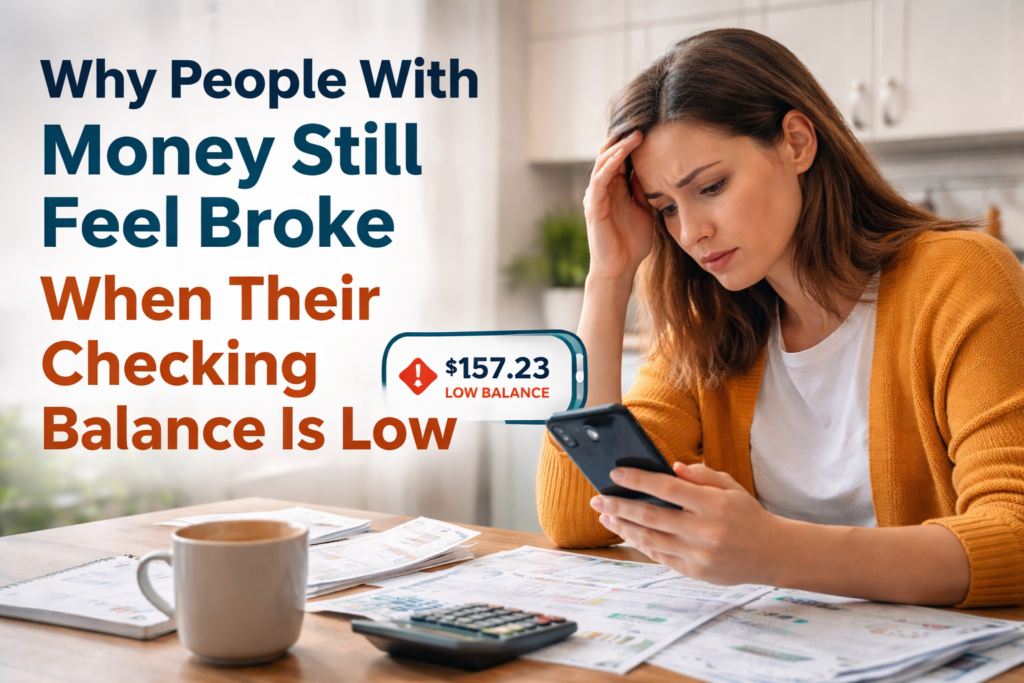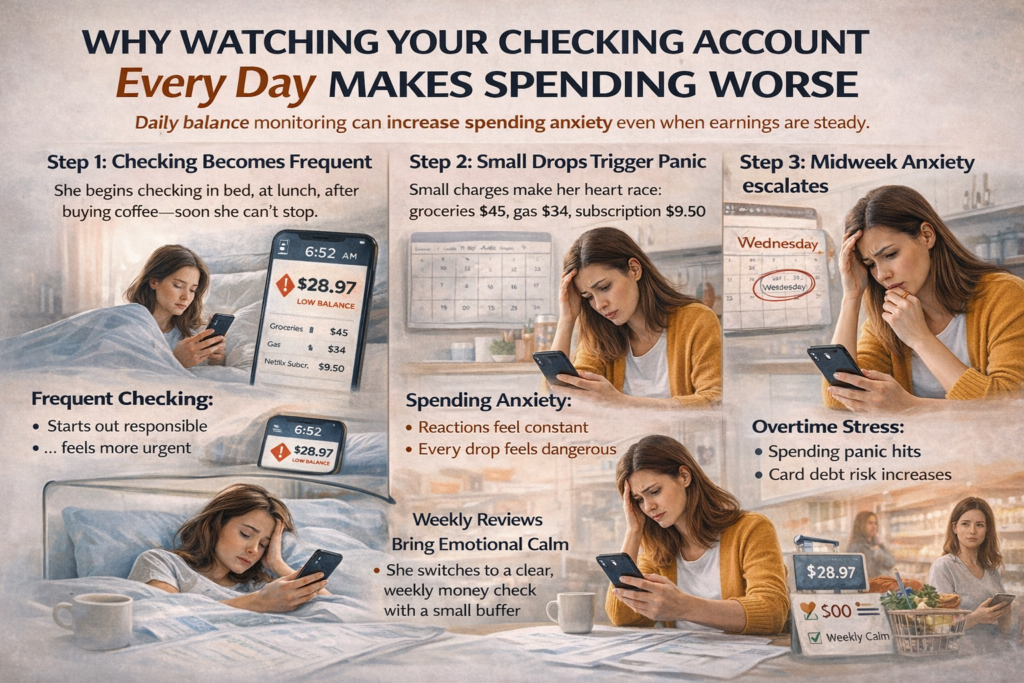
You open your banking app before you even get out of bed. The number looks fine. By lunch, you check again. After buying coffee, you check again. Nothing dramatic happened. No emergency. No late bill. But your chest feels tight anyway. This is checking account anxiety, and it often starts long before anything actually goes wrong.
At first, it feels responsible. You tell yourself you are being careful. You are staying aware. But something strange happens. The more often you look, the more unstable your money feels. A small grocery charge looks bigger than it is. A pending gas transaction feels like a warning sign. Checking account anxiety grows not because your balance is dangerous, but because you keep staring at every tiny movement.
This is not a discipline issue. It is not about being careless with money. It is about how your brain reacts to constant signals. When you watch your checking account every day, your nervous system never gets a break. Checking account anxiety becomes a daily habit, even if your income and expenses are steady.
If you feel tense every time you open your banking app, you are not irresponsible. Checking account anxiety often increases when visibility becomes constant instead of structured.
By the end of this article, you will understand why daily checking can make spending worse and how a healthier rhythm can reduce checking account anxiety without ignoring your money.
Why Logic Alone Does Not Fix This
On paper, watching your balance daily sounds smart. You believe it prevents overdraft fees and keeps spending controlled. But checking account anxiety is emotional, not mathematical. When you see your balance drop by $42 for groceries, your brain reacts instantly. It does not calmly calculate the rest of the month. It reacts to the loss in that moment.
This is similar to what happens in The Psychological Difference Between $100 and $500 in Your Checking Account. The visible number changes how safe you feel. The more often you watch it fluctuate, the more emotional swings you experience.
U.S. Money Insight
According to the Federal Reserve, 37% of U.S. adults would struggle to cover a $400 emergency expense with cash. When financial margins feel thin, frequent balance checking increases checking account anxiety because every small expense feels risky.
Cash-Flow Timing Insight
Most U.S. workers are paid biweekly or semimonthly. That means balances naturally rise and fall during the month. Watching those normal dips daily can intensify checking account anxiety even when total monthly income is stable.
The Timing Effect You Do Not Notice
Your balance is not meant to stay the same every day. Bills post. Pending transactions clear. Deposits arrive in cycles. If you check constantly, you are exposing yourself to every micro-movement. This creates the illusion that your finances are unstable.
This connects with Why Paycheck Timing Matters More Than How Much You Earn. Cash flow rhythm naturally includes dips. When you stare at those dips daily, checking account anxiety increases.
When Stress Peaks
Checking account anxiety often peaks midweek. Weekend spending posts. Automatic subscriptions clear. Your next paycheck still feels far away. This pattern is explained in Why Money Stress Peaks in the Middle of the Week. The emotional spike happens before any real financial danger exists.
Why Traditional Budgeting Does Not Help
Even if you have a budget, daily checking can override it. A monthly plan provides structure, but constant monitoring creates emotional noise. This is why How Long a Weekly Money Check Should Actually Take emphasizes structure over frequency. Too much checking increases checking account anxiety instead of reducing it.
Buffers Create Emotional Safety
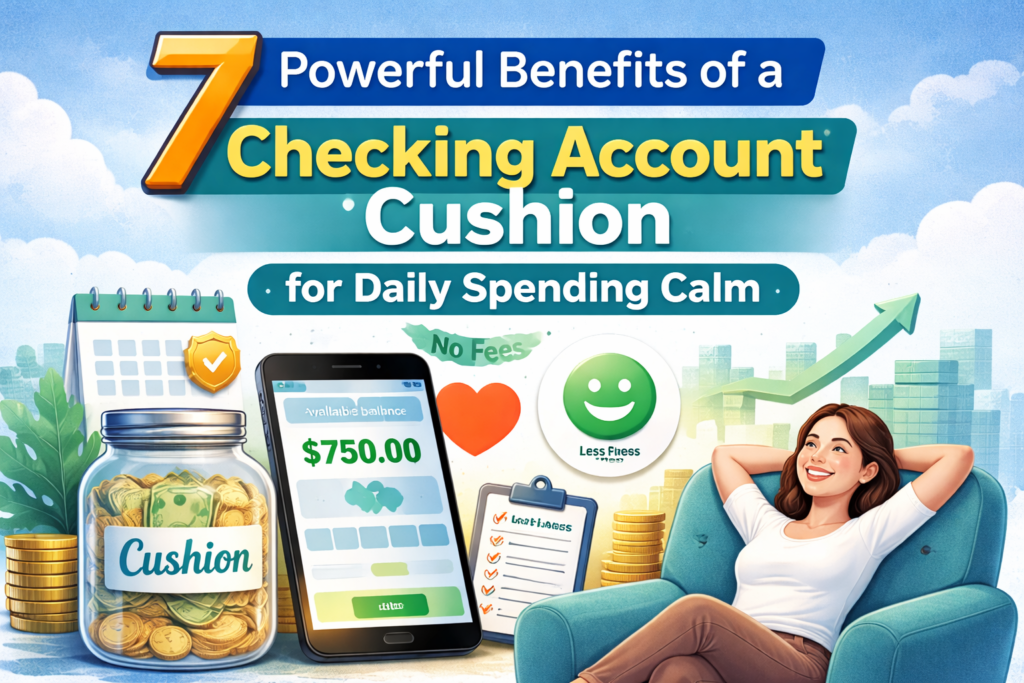
A checking cushion changes everything. When you know there is a small buffer in your account, you do not feel the need to watch every transaction. This idea is explored in How a Powerful Checking Account Cushion Changes Daily Spending Decisions. A visible cushion lowers checking account anxiety by creating psychological safety.
The Avoidance Loop
Interestingly, constant checking can lead to the opposite problem. You either check obsessively or stop checking completely. This cycle is described in Why Skipping Your Weekly Money Check Makes Money Feel Scarier Than It Is. Structured weekly review reduces checking account anxiety more effectively than daily monitoring.
Maria checked her banking app six times a day. Every grocery trip felt tense. After switching to a short weekly money check and building a $600 buffer, she stopped watching daily dips. Her income stayed the same. Her checking account anxiety dropped dramatically because she trusted her system instead of reacting to every small charge.
Weekly Reassurance vs Daily Monitoring
A weekly review gives clarity without overload. It lets you look ahead at upcoming bills, deposits, and spending plans. Daily checking magnifies small changes. Weekly structure reduces checking account anxiety by replacing reaction with planning.
If staying consistent feels difficult, the Daily Life Financial Planner – Complete Financial Management Bundle can help. It is a tool that helps people stay consistent when life gets busy and supports structured weekly reviews instead of stressful daily monitoring.
Frequently Asked Questions
Is checking daily always bad?
Not always. But for many people, frequent checking increases checking account anxiety instead of improving control.
How often should I check my balance?
A structured weekly review is usually enough to maintain awareness without emotional overload.
Will a buffer really help?
Yes. Even a small cushion reduces the emotional impact of normal balance dips.
Quick Reflection
- How many times a day do you open your banking app?
- Do small balance drops change your mood?
- Would a weekly rhythm reduce your checking account anxiety?
Final Thoughts
Watching your balance constantly feels responsible, but it can quietly increase checking account anxiety. Money moves in cycles. With a small buffer and a structured weekly review, you can reduce emotional swings and feel steady without staring at every transaction.