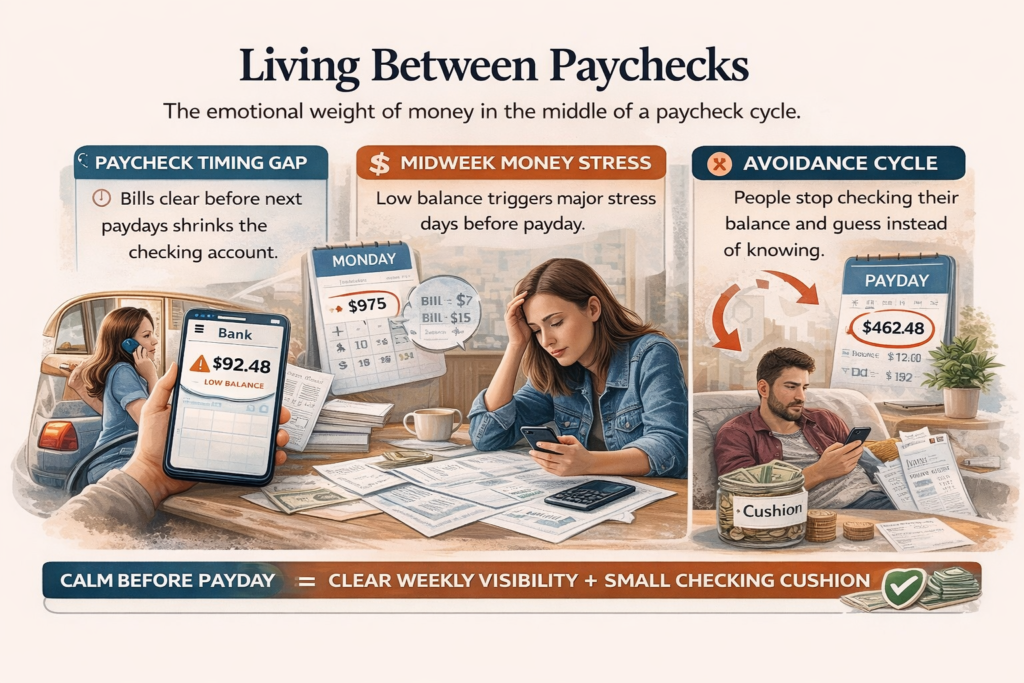
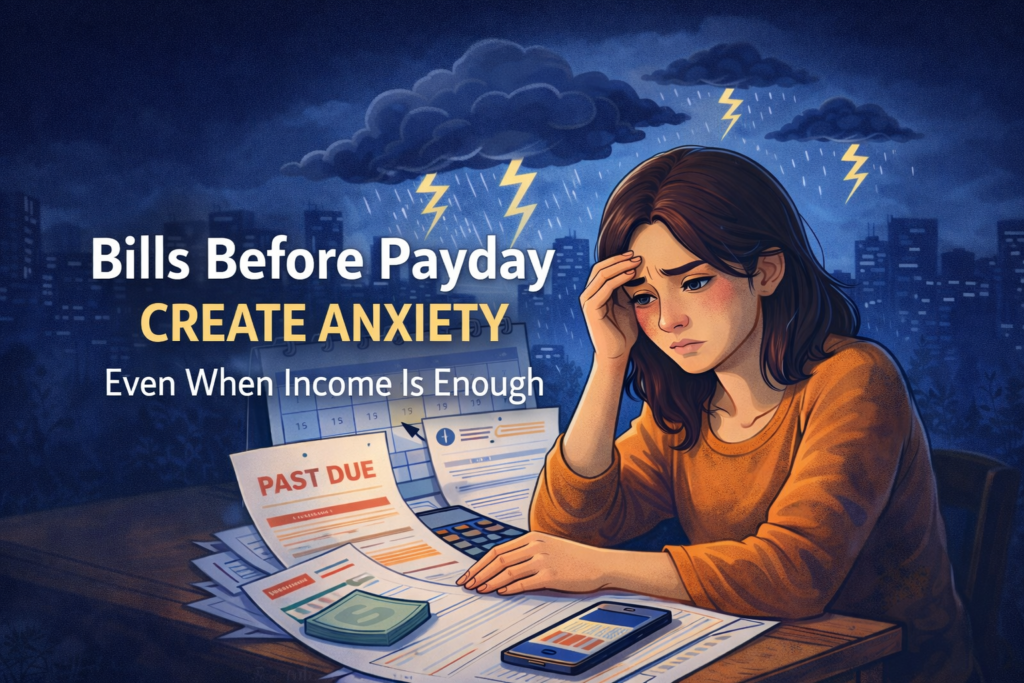
There is a very specific kind of stress that shows up a few days before payday. Nothing has bounced. No bill is late. You still have money in your checking account. But when you open your banking app, your chest feels tight. The number looks smaller than you want it to. This is the emotional weight of living between paychecks, and it often starts before anything actually goes wrong.
Maybe you paid rent last week. Groceries hit on Sunday. Gas on Monday. A subscription cleared on Tuesday. Your next deposit is still four days away. On paper, everything works. In real life, your balance looks thin. When you are living between paychecks, that thin number can feel unsafe even if your budget says you are okay.
This stress is not about being careless. It is not about failing at money. It is about timing. Your brain reacts to what it sees right now. If the number looks low, your body reads that as risk. Living between paychecks becomes an emotional experience long before it becomes a math problem.
If your money feels tight midweek even though your income covers your bills, you are not failing. You are feeling the emotional pressure of living between paychecks in a system built around monthly totals.
By the end of this article, you will understand why living between paychecks creates stress before anything goes wrong, and how small weekly changes can make your cash flow feel calmer and more predictable.
Why Income Alone Does Not Fix This Feeling
It is easy to believe that earning more would remove this stress. More income helps. But it does not automatically solve the emotional strain of living between paychecks. If your bills leave on the 1st and 15th but your pay arrives on the 5th and 20th, there will always be days when your balance dips before it rises again.
That dip is what your brain reacts to. Even if the month balances out, the middle of the cycle can feel shaky. This is why even people who relate to Why Money Feels Tight Midweek (Even When You’re Doing Everything Right) still feel uneasy. The issue is not always total income. It is the rhythm of your cash flow.
U.S. Money Insight
According to the Federal Reserve, 37% of U.S. adults would struggle to cover a $400 emergency with cash. That means more than 1 in 3 households feel stretched even before something unexpected happens. Living between paychecks is common across income levels.
Cash-Flow Timing Insight
The Bureau of Labor Statistics reports that housing takes about 34% of the average household budget. When one-third of income leaves quickly for rent or a mortgage, the days right after that payment naturally feel tighter. This timing pressure explains why living between paychecks often feels hardest right after major bills clear.
The Timing Gap Most Budgets Ignore
Most budgets are monthly. They list totals for rent, food, utilities, and savings. That helps you plan the month. But it does not always help you feel calm on Wednesday afternoon. When you are living between paychecks, you are thinking about today’s balance and how many days remain until payday.
This timing gap is described clearly in Paycheck Timing Budgeting and Why Money Feels Tight. When bills and paydays do not line up, your account drops before it refills. The math may work on paper. Emotionally, it feels unstable because your brain focuses on the dip instead of the upcoming deposit.
When Stress Peaks in the Week
For many people, stress peaks in the middle of the week. Weekend spending posts first. Groceries. Gas. Eating out. By Tuesday or Wednesday, the balance looks smaller. That is why so many readers relate to Why Fridays Feel Safe and Wednesdays Feel Dangerous Financially. The emotional pressure builds in the quiet stretch before the next paycheck.
Living between paychecks feels hardest when deposits are still days away and your account already looks thin. Waiting stretches time. Small purchases feel heavier because you are watching the number closely.
Why Traditional Budgeting Misses the Emotional Side
Traditional budgeting focuses on categories and totals. That is helpful for planning. But it does not always create reassurance. If your spreadsheet says you are fine but your checking account looks low, your body trusts what it sees.
This is why Budgeting Between Paychecks: 7 Simple Ways to Feel in Control of Your Money emphasizes timing and weekly awareness. And if you want one simple system, Weekly money check that finally makes money feel manageable shows how consistent check-ins reduce anxiety. Living between paychecks becomes less scary when you can clearly see the next seven days.
Buffers, Visibility, and Reassurance
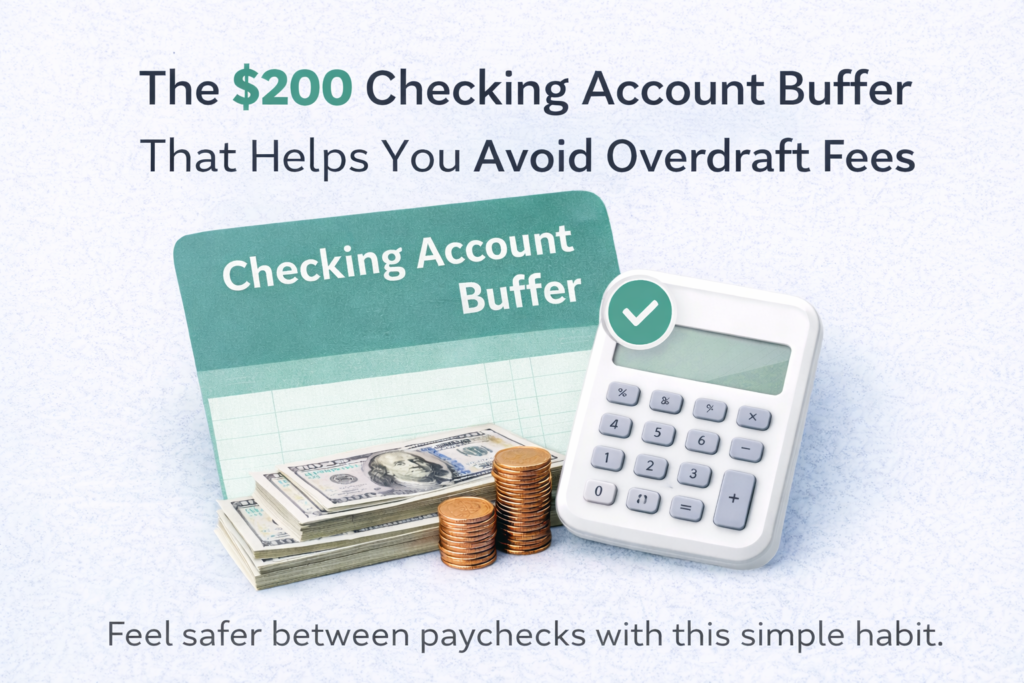
A small checking cushion can completely change the emotional experience of living between paychecks. Even $300 to $600 sitting untouched in your account softens the drop between deposits. It acts like padding so your balance does not fall into a stressful range.
This idea connects with The Checking Account Buffer That Helps You Avoid Overdraft Fees. A cushion does not mean you are wealthy. It means you are buffered. That buffer gives your brain proof that you are safe while waiting.
The Avoidance Loop That Makes It Worse
When stress rises, many people stop checking their accounts. They guess instead of knowing. That guessing makes every purchase feel uncertain. Living between paychecks feels scarier when the numbers are unclear.
This pattern appears in Why Skipping Your Weekly Money Check Makes Money Feel Scarier Than It Is. Avoidance increases anxiety because your brain fills in missing information with worst case stories. Clear visibility restores calm.
Danielle works full time and gets paid twice a month. Her bills are automated. Nothing is late. But every month around the 10th, her balance dips under $500. She delays filling her tank and avoids checking her account. After building a $600 cushion and doing a short weekly money check, her income stayed the same. Her stress changed. Living between paychecks stopped feeling like danger and started feeling predictable.
Weekly Reassurance vs Monthly Planning
Monthly planning gives direction. Weekly reassurance gives peace. When you check your money once a week and look ahead at upcoming bills, you shorten the emotional gap. Living between paychecks becomes about tracking rhythm instead of fearing the dip.
A short weekly check builds trust in your system. Trust lowers anxiety and makes ordinary spending feel stable again.
If staying consistent feels hard when life gets busy, the Daily Life Financial Planner – Complete Financial Management Bundle can help. It is a tool that helps people stay consistent when life gets busy and gives you one clear place to track weekly balances, upcoming bills, and your checking cushion so living between paychecks feels organized instead of chaotic.
Frequently Asked Questions
Is living between paychecks always about low income?
No. Many steady earners feel this stress because of timing gaps between bills and deposits.
How much cushion helps?
Even a few hundred dollars in checking can soften the emotional dip between paydays.
Does a weekly money check really matter?
Yes. Regular visibility reduces guessing and makes living between paychecks feel predictable.
Quick Reflection
- Notice which days feel most financially tense.
- Look at the gap between your biggest bill and payday.
- Consider building a small cushion for emotional calm.

Final Thoughts
Living between paychecks is not a personal flaw. It is a timing experience shaped by how money moves through your account. When you build small buffers and practice weekly visibility, the dips feel less threatening. With rhythm and reassurance, living between paychecks becomes manageable instead of overwhelming.
Pingback: 7 Ways to Fix the Weekly Money Check Mistake
Pingback: 7 Powerful Truths About Checking Account Balance Psychology