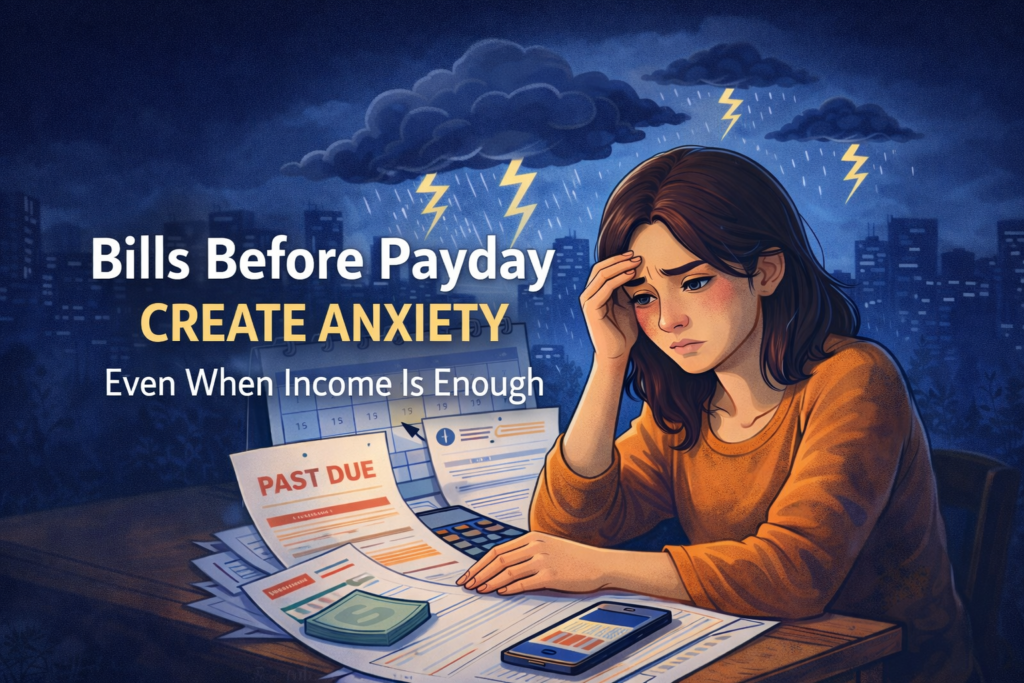
It is Tuesday night. Nothing terrible has happened. Your paycheck already cleared. The rent is scheduled. Groceries are in the fridge. Still, your chest feels tight when you think about opening your bank app. You tell yourself you will do your weekly money check tomorrow. That quiet resistance shows up before any real problem exists. A weekly money check feels heavy right when clarity would help the most.
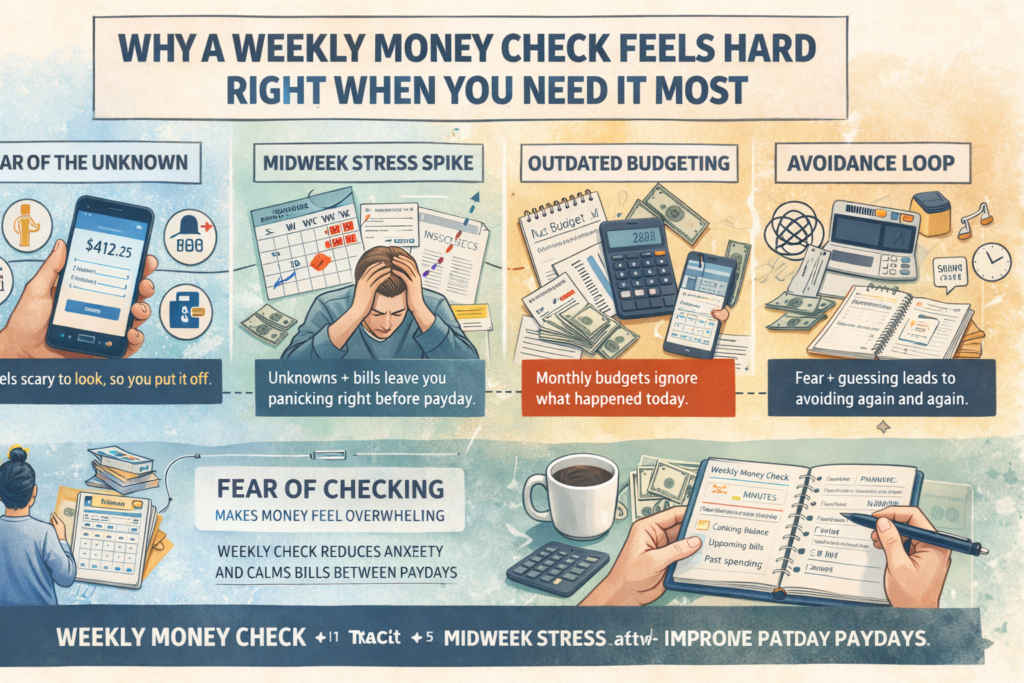
This reaction is not about laziness. It is about protection. When money feels uncertain, your brain scans for danger. Even small things like a higher gas receipt or an automatic subscription can trigger stress. The weekly money check forces you to look directly at numbers. Looking feels risky when you are not sure what you will see. So your brain delays it.
Many hardworking Americans experience this pattern. They pay their bills. They show up to work. They try to be responsible. But when it is time for a weekly money check, they feel a wave of emotion before they see a single number. That emotional spike happens before math. It is about fear of the unknown, not lack of discipline.
If doing a weekly money check makes your stomach drop, that does not mean you are bad with money. It means uncertainty feels uncomfortable, and your brain wants relief.
By the end of this article, you will understand why a weekly money check feels so difficult and how to make it feel steady, simple, and safe.
Why Logic and Income Alone Do Not Fix This
It seems logical that earning more money should remove anxiety. But emotional stress does not disappear just because income rises. Stress grows in the space between what you expect and what you know. If you are unsure how much is left after bills, your brain fills the gap with worst case guesses. A weekly money check replaces guessing with facts. Facts calm the nervous system in a way assumptions never can.
According to the Federal Reserve, 37 percent of U.S. adults would have difficulty covering a $400 emergency with cash. That means more than 1 in 3 adults live with very little margin. When your cushion feels thin, even small spending changes feel threatening. A weekly money check gives you visibility so small shifts do not turn into large fear.
U.S. Money Insight
The Bureau of Labor Statistics reports that consumer prices increased 3.4 percent over the past year. Even small inflation adds pressure to groceries, utilities, and gas. When everyday costs rise quietly, a weekly money check helps you adjust before stress builds.
The Timing Gap That Creates Pressure
Most households do not receive paychecks on the exact day bills are due. Rent may be due on the first. Payday might fall on the third or fourth. Credit card payments often draft midweek. This gap between income and expenses creates mental strain. Without a weekly money check, the gap feels unpredictable. With it, you see the flow clearly and plan calmly.
Cash-Flow Timing Insight
NerdWallet reports that the average U.S. household carries over $6,000 in credit card debt. When balances exist, timing between paychecks and due dates becomes critical. A weekly money check keeps those dates visible so late fees and overdraft stress stay avoidable.
When Stress Peaks in the Middle of the Week
Midweek often feels heavier financially. Paycheck excitement fades. Upcoming withdrawals become clearer. Many readers describe this pattern in Why Money Stress Peaks in the Middle of the Week. A weekly money check placed on the same day each week reduces this spike. Routine creates stability, and stability lowers emotional intensity.
Why Traditional Budgeting Fails Emotionally
Monthly budgeting works on paper. Real life happens daily. Unexpected school expenses, medical copays, and higher grocery totals break neat monthly categories. When the plan feels broken, people avoid reviewing it. This emotional shutdown is explored in Why Skipping Your Weekly Money Check Makes Money Feel Scarier Than It Is. A weekly money check works better because it adjusts in real time.
Buffers, Visibility, and Reassurance
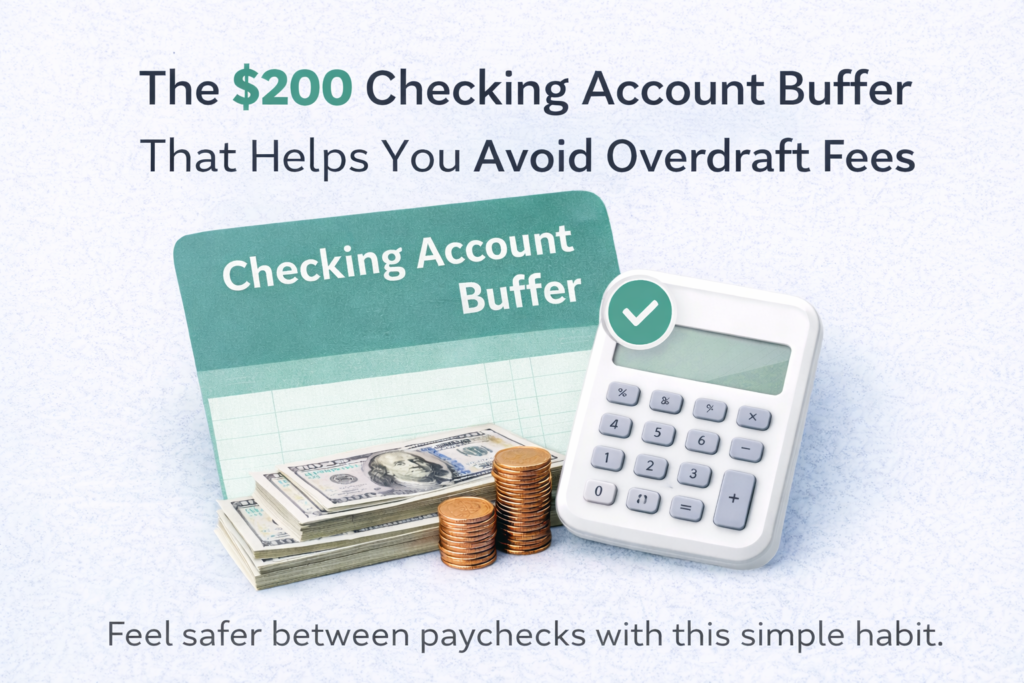
One reason the weekly money check feels intense is low checking account cushion. When your balance feels close to zero, looking at it feels threatening. Even a small buffer changes that emotional reaction. Building a cushion is explained in How a Powerful Checking Account Cushion Changes Daily Spending Decisions. When you combine a buffer with a weekly money check, your brain stops assuming disaster.
The Avoidance Loop
A skipped weekly money check gives short term relief. You avoid discomfort for a day or two. But uncertainty grows quietly. You begin guessing instead of knowing. That guessing increases stress, which makes avoidance more tempting. This loop is common after overspending, as described in What Happens When You Do a Weekly Money Check After a Bad Spending Week?. Breaking the loop starts with one calm review, not a perfect month.
James gets paid every other Friday. One week he spent extra on car repairs and groceries. He delayed his weekly money check because he feared bad news. By Wednesday he felt certain he was behind. When he finally looked, he saw he still had enough to cover bills until payday. The numbers were tight but manageable. The relief came from visibility, not from earning more.
Weekly Reassurance vs Monthly Planning
Monthly plans set direction. A weekly money check provides reassurance. Think of it like checking a weather app during a road trip. You do not wait for a storm warning to glance at the forecast. You check regularly so small shifts stay small. Over time, the weekly money check becomes less emotional and more routine. Routine builds confidence.
If you want structure for your weekly money check, the Daily Life Financial Planner – Complete Financial Management Bundle is a tool that helps people stay consistent when life gets busy. It gives one clear space to review income, bills, and spending without overwhelm.
FAQ
How long should a weekly money check take?
About 15 to 20 minutes. The goal is awareness and reassurance, not perfection or complex calculations.
What if I am afraid to look at my balance?
Start by checking only your current balance and upcoming bills. Small exposure reduces emotional intensity over time.
Is a weekly money check the same as budgeting?
No. Budgeting plans ahead. A weekly money check reviews what already happened and prepares you for the next few days.
What day works best?
Many people choose Sunday evening or Monday morning so the week begins with clarity instead of guessing.
- What emotion shows up before you open your bank app?
- How would knowing your exact balance change your week?
- What small step could make your next weekly money check feel calmer?
Final Thoughts
A weekly money check feels hard because it asks you to replace guessing with knowing. But that replacement is where calm begins. When you review your numbers weekly, stress loses its mystery. Over time, your weekly money check becomes a steady habit that makes money feel manageable instead of threatening.