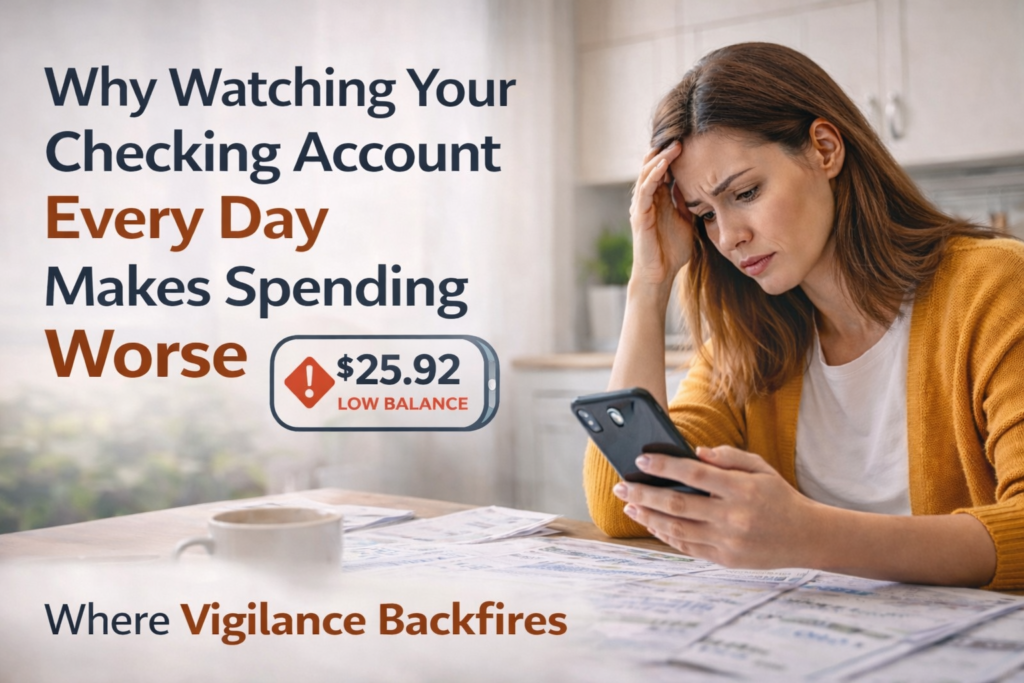
Checking account cushion is often the invisible difference between calm daily spending and quiet financial tension. Most people do not think about it when balances are comfortable. They only notice its absence when the number on the screen drops lower than expected. That drop rarely means disaster. Yet it can instantly change how safe the week feels.
Stress does not usually begin when a card declines or a bill fails. It begins earlier, when the visible margin feels thin and the balance looks too close to zero for comfort. That subtle shift in available funds can influence mood, patience, and even small everyday choices before anything has technically gone wrong. A checking account cushion protects against that emotional drop.
Many Americans with stable income still experience anxiety when their available balance dips near uncomfortable territory. This reaction is not about irresponsibility or lack of planning. It is about perception. When visible breathing room disappears, the nervous system interprets it as increased risk. A checking account cushion restores that breathing room and stabilizes how the present moment feels.
This article explains how a small checking account cushion changes daily spending decisions, reduces balance anxiety, helps prevent overdraft stress, and builds emotional steadiness without strict budgeting rules or constant monitoring.
If you have ever felt tense looking at your balance even though your income was steady, you are not alone. That tension reflects visibility and timing—not failure.
By the end of this article, you will understand why a checking account cushion shifts daily behavior naturally, how it protects against unnecessary fees, and why visible margin matters more than perfect budgeting systems.
Why income alone does not calm balance anxiety
On paper, income may fully cover monthly expenses. Rent is paid. Utilities are scheduled. Groceries are manageable. Yet anxiety still appears when the visible balance shrinks. The reason is simple: the brain reacts to what it sees today, not what is expected next week. Scheduled income does not calm immediate uncertainty.
Timing gaps between expenses and paychecks create temporary low points in the monthly cycle. During those days, even financially stable households can feel vulnerable. This pattern is explained in how bills before payday create anxiety even when income is enough. The stress is rarely mathematical. It is psychological.
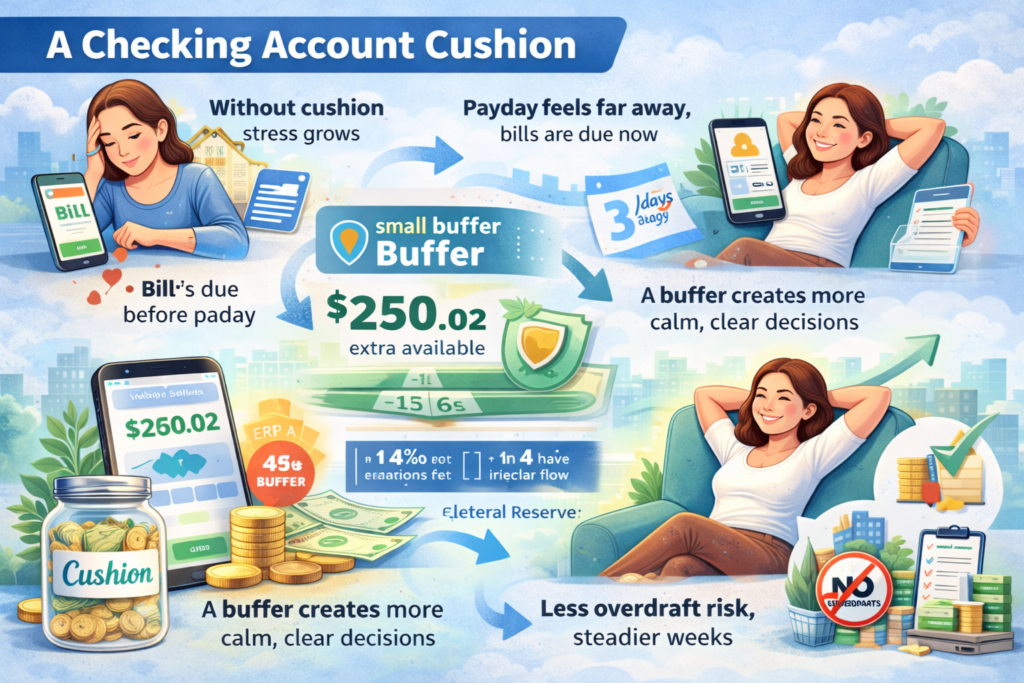
A checking account cushion absorbs those timing dips. Instead of watching the balance approach uncomfortable territory, the lowest point remains visibly stable. That stability changes how the week feels, even though income has not changed.
U.S. Money Stress Insight
Federal Reserve research shows that short-term cash-flow timing causes stress even among households with consistent income. Balance fluctuations often feel riskier than they truly are.
How a small margin changes daily spending behavior
When your balance feels fragile, small decisions become emotionally heavy. Buying groceries can feel like overspending. Filling the gas tank may trigger hesitation. Even inexpensive purchases prompt second-guessing. The mind interprets a thin margin as threat.
A checking account cushion softens those reactions. With visible space between your balance and zero, everyday purchases feel routine instead of risky. People often notice they stop obsessively checking their banking app when a cushion exists.
This experience connects directly to the panic described in why seeing a low checking account balance triggers panic. The cushion does not change income. It changes perception, and perception drives behavior.
Over time, this shift builds confidence. Instead of reacting emotionally to every small transaction, spending becomes steadier. Decisions become less reactive and more thoughtful.

Why traditional budgeting does not create the same effect
Monthly budgets focus on totals and categories. They answer long-term planning questions. But they do not protect the visible low point during the month. Even a perfectly structured plan cannot calm anxiety when the available balance feels exposed.
Approaches like budgeting between paychecks recognize that timing matters more than rigid limits. A checking account cushion works alongside that awareness by protecting the emotional dip in the cycle.
The difference is subtle but powerful. Instead of trying to control spending tightly, the cushion creates safety first. Safety reduces overcorrection and impulsive reactions.
How a small cushion changes daily decisions
When your balance feels fragile, small decisions become emotionally heavy. Buying groceries can feel like overspending. Filling the gas tank may trigger hesitation. Even inexpensive purchases prompt second-guessing. The mind interprets a thin margin as threat. This reaction happens automatically, not because you lack discipline, but because the visible space between your balance and zero feels too small.
A checking account cushion changes how those moments feel in real time. When there is visible breathing room, everyday purchases stop feeling like risks. Groceries become routine. Gas becomes a necessity instead of a debate. The presence of a checking account cushion does not increase income, but it reduces the emotional intensity attached to normal spending decisions.
Over time, that difference compounds. Without a checking account cushion, people tend to swing between restriction and avoidance. They either clamp down too tightly after feeling exposed or avoid checking altogether because the numbers feel uncomfortable. A checking account cushion interrupts that cycle by stabilizing the lowest point in the pay cycle. Stability creates steadiness.
That steadiness builds quiet confidence. Instead of reacting emotionally to each transaction, decisions become measured and thoughtful. The checking account cushion transforms daily spending from something reactive into something intentional. Nothing dramatic changes on the outside. Yet internally, money feels less threatening and more manageable.
When stress peaks during the week
For many households, financial anxiety peaks midweek. Early bills have cleared. Subscriptions post automatically. Paycheck reassurance feels distant. Without visible margin, those days can feel tense and uncertain.
This rhythm is described in why money stress peaks in the middle of the week. The emotional low point often aligns with the calendar low point.
A checking account cushion smooths that dip. Instead of bracing for the worst, the balance remains above panic territory. That visible steadiness changes the emotional tone of the week.
Overdraft prevention and rebuilding trust
Beyond emotional stability, a checking account cushion reduces the likelihood of accidental overdrafts caused by small timing miscalculations or delayed transactions. Even minor pending charges can create problems when balances are tight.
This protective role is explained in the checking account buffer that helps you avoid overdraft fees. Avoiding fees strengthens trust in your money system.
When trust increases, fear decreases. Spending becomes calmer because you no longer expect surprise penalties.
The avoidance loop that margin interrupts
Low balances often lead to avoidance. People delay checking their accounts because looking feels stressful. That delay increases uncertainty. Increased uncertainty increases stress.
This cycle is described in why skipping your weekly money check makes money feel scarier than it is. Avoidance provides temporary relief but long-term anxiety.
A checking account cushion interrupts this loop. When the balance consistently stays above uncomfortable territory, checking feels safer. Visibility increases. Anxiety decreases.
A short real-life example
Imagine someone whose account regularly drops close to zero before payday. Each month, they experience three or four tense days. After building a modest checking account cushion, the lowest point of the cycle no longer feels threatening. Income stayed the same. Bills stayed the same. But grocery trips stopped feeling stressful, and opening the banking app stopped feeling risky.
Why weekly reassurance strengthens the cushion effect
A cushion works best alongside gentle weekly visibility. Regular check-ins shorten uncertainty windows and prevent surprises from building up. Practices like a weekly money check that finally makes money feel manageable reinforce stability.
Awareness and margin together create calm. One provides visibility. The other provides protection.
A supportive tool for consistency
The Daily Life Financial Planner – Complete Financial Management Bundle helps track timing gaps, balances, and your checking account cushion without turning money into a daily burden. Structure creates steadiness.
Final thoughts
A checking account cushion is not about perfection. It is about emotional steadiness and visible margin.
When a checking account cushion exists, daily spending decisions feel calmer, overdraft fear decreases, and money becomes manageable again.