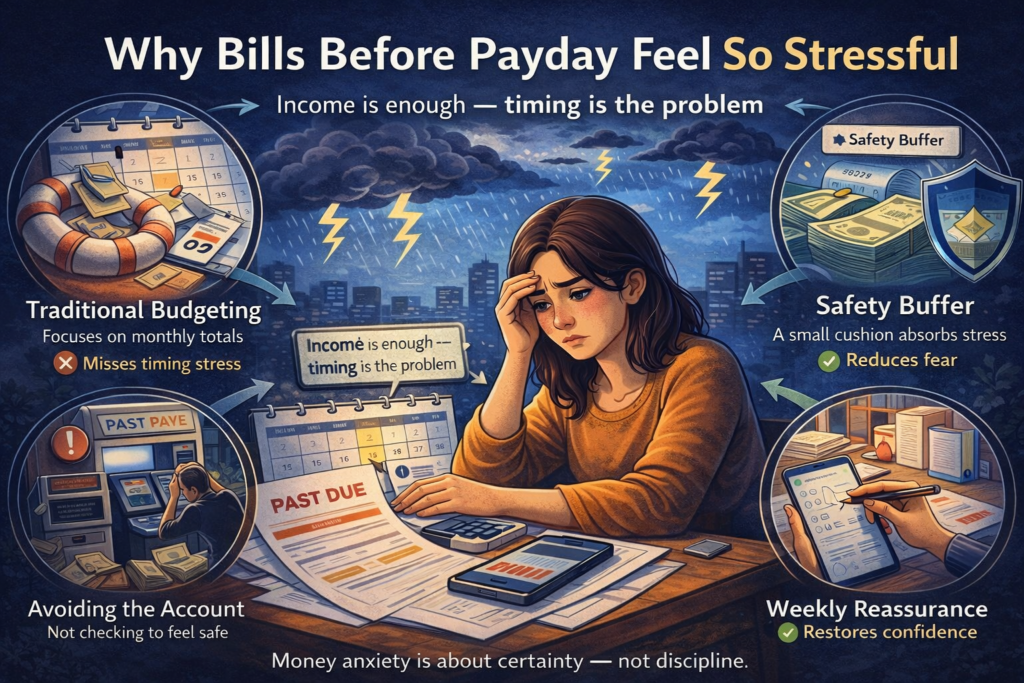
Bills before payday are one of the most common yet misunderstood causes of money anxiety in the United States. Millions of people earn stable, predictable income and still feel uneasy, stressed, and mentally tight in the days leading up to their paycheck. This anxiety is not caused by overspending, poor habits, or financial irresponsibility. Bills before payday trigger stress because of timing, not behavior. When money leaves an account before income arrives, the brain reacts emotionally long before logic can catch up.
For many working adults, bills before payday quietly create a sense of financial danger even when rent is paid, utilities are covered, and groceries are affordable. Bills before payday shrink emotional breathing room. The gap between outgoing expenses and incoming income feels unstable, and that instability creates anxiety even when the math clearly says everything is fine.
This article explains why bills before payday create anxiety even when income is enough, how paycheck timing distorts perception, and how simple weekly systems reduce stress without stricter budgeting, constant tracking, or earning more money.
Why this feeling is more common than people admit
Many people silently carry financial tension without talking about it. Friends, coworkers, and even family members often appear confident on the surface while privately worrying about short-term stability. Because money conversations are uncomfortable, this stress stays hidden, making individuals believe they are alone in feeling this way.
In reality, this emotional response is widespread and deeply human. It reflects uncertainty, not failure. Recognizing that others experience the same internal pressure is often the first step toward easing it.
By the end of this article, you will understand why bills before payday feel threatening, why reassurance matters more than income size, and how to regain calm without micromanaging your money.
Why income alone does not prevent money anxiety
One of the most damaging myths in personal finance is that anxiety disappears once income reaches a certain level. People believe that earning enough should automatically create peace of mind. When that peace does not arrive, they blame themselves. Bills before payday expose why this belief is flawed.
Income does not arrive continuously. Income arrives on specific days. Bills before payday, however, arrive steadily throughout the month. Rent, subscriptions, insurance, groceries, childcare, fuel, and utilities cluster early for many households. This mismatch between income timing and expense timing creates emotional pressure that income alone cannot solve.
When bills before payday clear an account early, the nervous system reacts to uncertainty. The brain does not evaluate annual salary or monthly totals. The brain evaluates immediate safety. Bills before payday signal risk because money is leaving and not yet returning.
This is why someone earning $70,000 a year can feel anxious while someone earning less but with better timing feels calmer. Bills before payday create stress through rhythm, not discipline.
📊 U.S. Money Stress Reality
According to a 2023 American Psychological Association report, money remains the top source of stress for U.S. adults — even among households earning stable incomes.
This confirms that financial anxiety is often driven by bills before payday rather than income level.
How bills before payday trigger uncertainty
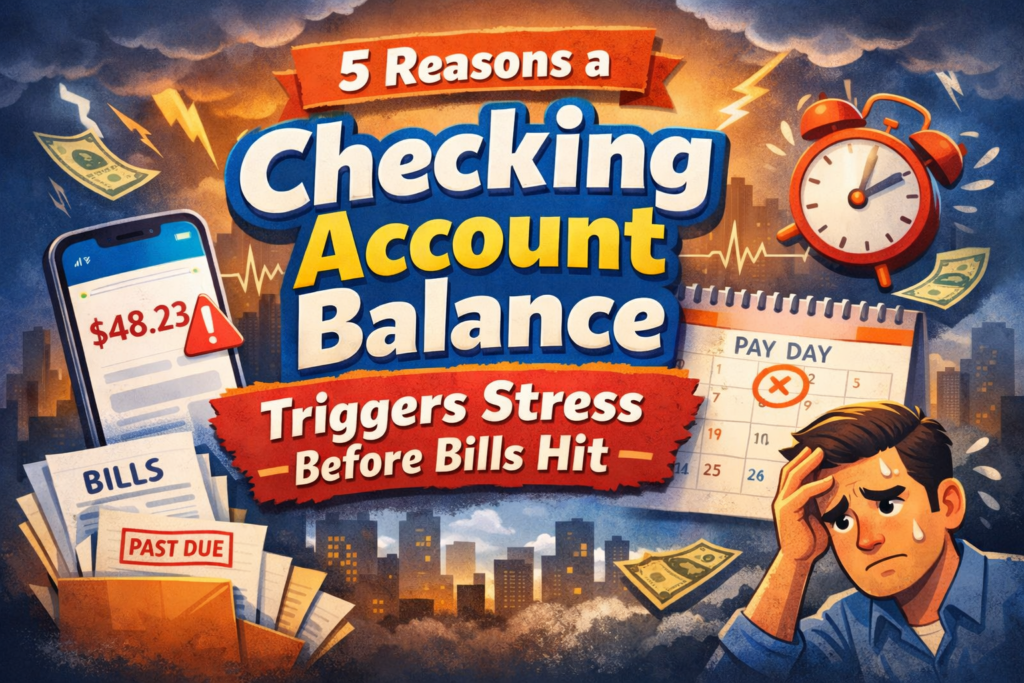
Bills before payday create a window where money flows out without reassurance flowing back in. During this window, the brain loses context. Bills before payday reduce visibility into how close the margin really is.
Without clarity, the mind fills gaps with imagined threats. Bills before payday lead people to imagine overdrafts, missed payments, or running out, even when these outcomes are unlikely.
The fear created by bills before payday is rarely about the bill itself. Most people know they can pay it. The fear comes from not knowing what remains afterward.
This uncertainty turns manageable situations into emotional stress. When expenses hit before income arrives, numbers can feel unsafe even when they are objectively fine.
Why timing stress peaks midweek
For many households, financial tension tends to peak in the middle of the week. Early expenses have already cleared. Automatic payments have posted. Groceries and fuel are paid for.
At the same time, payday still feels far away. The calendar gap stretches, and reassurance is missing.
This explains why so many people experience money stress midweek even when they are budgeting and earning consistently.
The issue is not overspending. The issue is going too long without confirmation that everything is still okay.
📊 Cash-Flow Timing Stress
A Federal Reserve survey found that nearly 40% of U.S. adults struggle to cover a $400 emergency — showing how timing gaps amplify anxiety even when regular bills are paid.
The emotional cost of guessing instead of knowing
When money feels uncertain, many people stop checking their accounts. Avoidance feels protective because looking feels risky.
But avoiding information forces the brain to guess. Guessing is emotionally expensive. The mind rarely fills gaps with neutral assumptions. It fills them with worst-case scenarios.
People often assume they are closer to the edge than they actually are.
This emotional difference between guessing and knowing is explained in detail in weekly money check, where scheduled clarity replaces fear with facts.
Knowing where you stand — even when the number is lower than expected — calms the nervous system far more than uncertainty ever could.
Why traditional budgeting fails during timing gaps
Traditional budgeting focuses on monthly totals. This approach often fails emotionally during weeks when expenses arrive early.
Monthly budgets answer “Can I afford this this month?” But real life often asks a different question: “Am I okay right now?”
When early expenses reduce available cash, the plan may still work on paper, but day-to-day confidence drops.
This is why people who “do everything right” still feel stressed. The system does not match how money actually moves.
This issue is addressed directly in budgeting between paychecks, which focuses on timing rather than restriction.
The role of checking account buffers
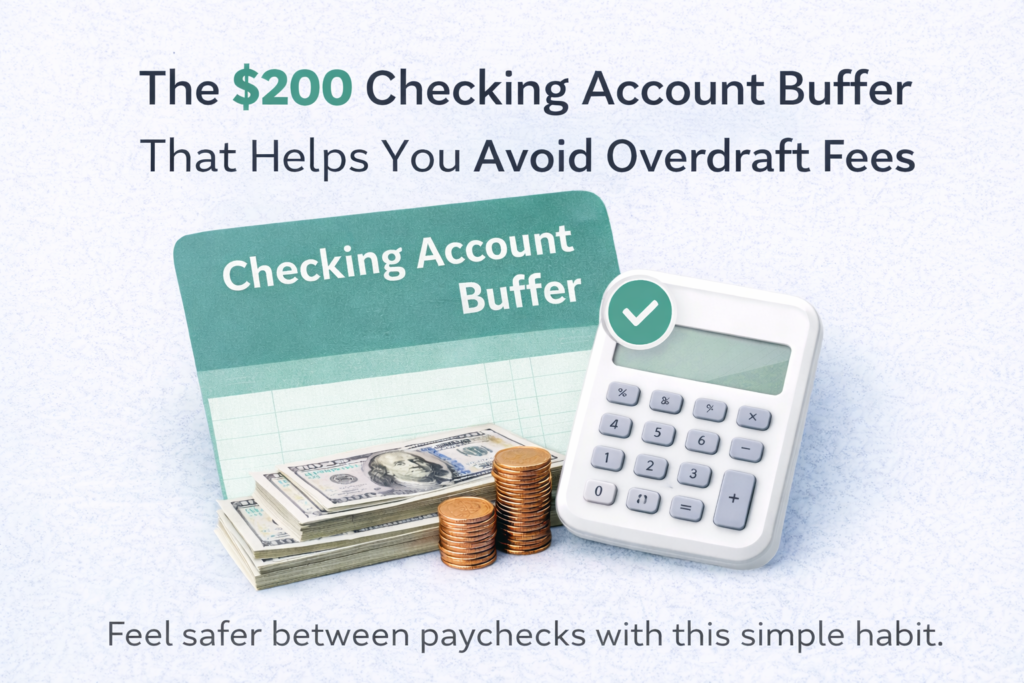
One of the most effective ways to reduce anxiety during timing gaps is maintaining a small buffer.
A buffer absorbs short-term pressure. Expenses stop feeling like cliffs and start feeling manageable.
Knowing how much money to keep in checking account creates emotional safety during weeks when income feels distant.
This is not about saving aggressively. It is about smoothing volatility.
How avoidance worsens the cycle
Financial stress often creates a feedback loop. Expenses trigger worry. Worry leads to avoidance. Avoidance increases uncertainty.
Over time, money becomes emotionally charged. Small purchases feel risky. Simple decisions feel heavy.
This pattern is explored deeply in why skipping your weekly money check makes money feel scarier.
A real-life example
Someone earns enough to live comfortably. But rent clears several days before payday. Every month, anxiety rises. Purchases are delayed. Stress builds. When they finally check their balance, everything is fine. The stress came from uncertainty, not lack.
Why weekly reassurance matters more than monthly planning
Monthly planning answers long-term questions. Weekly reassurance answers emotional ones.
Stress increases when reassurance arrives too late.
A simple tool that supports weekly clarity
Some people find it easier to stay consistent when everything lives in one place. The Daily Life Financial Planner – Complete Financial Management Bundle supports calm weekly reviews and reduces anxiety caused by timing gaps.
Frequently Asked Questions
Why does timing create anxiety?
Timing reduces perceived safety by shrinking reassurance windows.
Is this stress a discipline issue?
No. It is a structural timing issue.
Does checking more often help?
Scheduled checks help. Constant checking does not.
Quick Check
When does money stress hit hardest?
- Several days before payday
- Midweek
- After large expenses clear
- When I avoid checking

Final thoughts
Bills before payday do not mean failure.
They mean reassurance is missing.
When reassurance is restored, anxiety fades — even without earning more.
Pingback: 7 Reasons Low Checking Balance Anxiety Makes People With Money Feel Broke
Pingback: 7 Reasons Midweek Money Stress Makes Wednesdays Feel Financially Risky
Pingback: 7 Powerful Benefits of a Checking Account Cushion for Daily Spending Calm