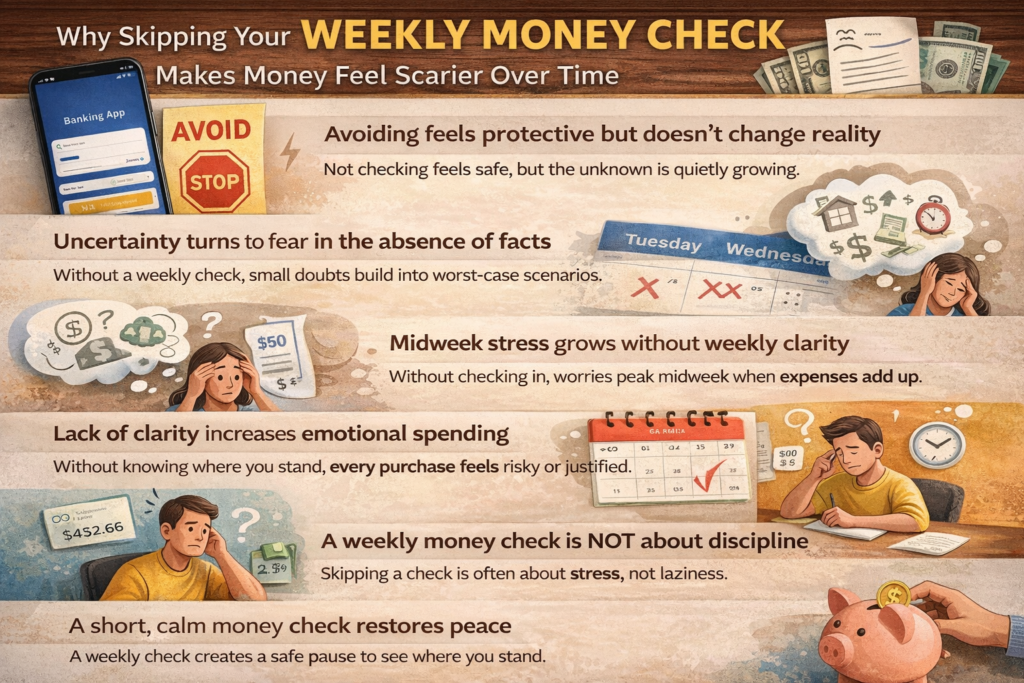
Weekly money check avoidance is one of the quiet reasons money starts to feel heavier than it actually is. Many people are not struggling because they lack income or discipline. They struggle because they stop looking. When money feels uncertain, the natural response is to avoid it, hoping the feeling will pass on its own.
Skipping a weekly money check does not make problems disappear. It makes them feel bigger, more emotional, and harder to understand. What starts as discomfort turns into fear, not because something went wrong, but because clarity went missing.
By the end of this article, you will understand why skipping a weekly money check increases financial fear and how simple weekly clarity makes money feel more manageable without stricter budgeting or constant tracking.
Why avoiding a weekly money check feels protective at first
When money feels tight or uncertain, skipping a weekly money check can feel like relief. Opening a banking app brings tension. Numbers feel loaded with meaning. Avoidance feels like control.
This reaction is human. Avoiding discomfort is how the brain tries to reduce stress in the short term. The problem is that money does not pause just because you stop looking at it.
A weekly money check is not avoided because people are careless. It is avoided because money carries emotional weight. Skipping the check feels safer than confronting uncertainty.
How skipping a weekly money check turns uncertainty into fear
Fear grows in the absence of information. When you skip a weekly money check, your brain fills in the blanks. It assumes worst-case scenarios. It imagines running out, being behind, or missing something important.
This is why money can feel scarier than it actually is. The numbers may still be manageable, but without context, the mind creates threat.
A weekly money check replaces imagination with facts. Without it, uncertainty compounds quietly until money feels overwhelming.
The connection between weekly money check avoidance and midweek stress
Skipping a weekly money check often makes money stress peak in the middle of the week. Early expenses clear. Paychecks feel distant. Without a check-in, there is no clear signal of whether the week is still okay.
This pattern explains why many people experience money stress midweek even when they are budgeting and earning consistently. The issue is not spending. It is the lack of weekly clarity.
A weekly money check breaks this cycle by providing reassurance before stress escalates.
Why skipping your weekly money check is not about laziness
People often blame themselves for skipping a weekly money check. They assume it means they are irresponsible or undisciplined. This belief creates shame and makes avoidance worse.
In reality, skipping a weekly money check is often a response to mental overload. By midweek, decision fatigue is high. Adding one more task feels heavy.
The problem is not effort. The problem is that money has not been given a calm, predictable place to be handled.
Paycheck timing makes weekly money check avoidance more dangerous
When expenses arrive before income, skipping a weekly money check becomes riskier. Bills, groceries, and automatic payments quietly reduce balances. Without a check-in, the gap feels larger than it actually is.
This is closely tied to budgeting between paychecks. Even when monthly math works, weekly timing creates emotional pressure.
A weekly money check shows what is left for the week, not just what is left for the month.
How skipping a weekly money check increases emotional spending
When clarity disappears, emotional spending often increases. Without knowing where you stand, every purchase feels risky or justified at the same time.
Some people overspend because they assume things are already bad. Others underspend because they fear making things worse. Both reactions come from the same place: missing information.
A weekly money check reduces emotional swings by anchoring decisions in reality.
A real-life example
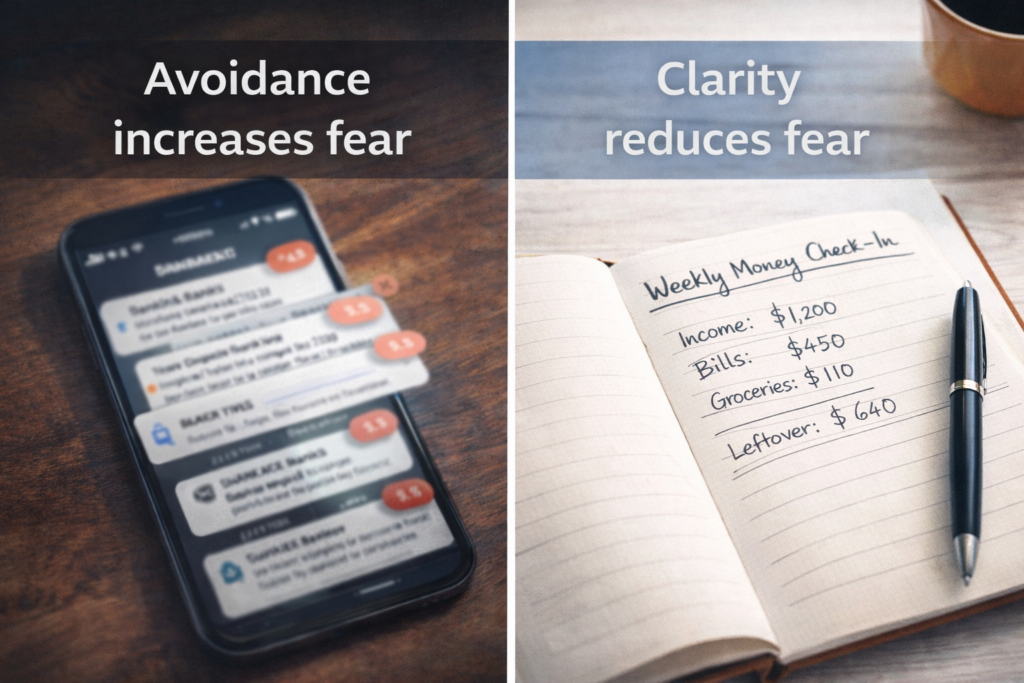
Someone skips their weekly money check because work was stressful. On Wednesday, a routine grocery run feels tense. The amount is normal, but uncertainty makes it feel dangerous. When they finally check their account, they realize the week was manageable all along.


Pingback: 10-Minute Weekly Money Check: Why Longer Reviews Increase Stress
Pingback: 5 Reasons a Checking Account Balance Triggers Panic Before Bills Hit