Money stress midweek is one of the most common and emotionally draining financialexperiences for working adults in the United States. Many people start the week feeling steady and hopeful, only to feel a slow, creeping tension by Tuesday or Wednesday. Nothing dramatic happens. No unexpected bill arrives. No major mistake is made. Yet money suddenly feels heavier, more fragile, and harder to think about calmly.
This pattern is not random, and money stress midweek is not a sign that you are bad with money or irresponsible. It is a predictable reaction to paycheck timing, mental fatigue, and uncertainty. Understanding why money stress midweek happens matters because once you can name it, you stop blaming yourself for something that is largely structural and emotional rather than personal.
Money stress midweek shows up across income levels. It affects people who budget, people who track their spending, and people who earn stable paychecks. It appears because the middle of the week exposes the gap between effort and clarity.
This article is for people who feel tense about money in the middle of the week even when nothing has technically gone wrong. If that sounds familiar, you are not alone.
By the end of this article, you will understand why money stress midweek happens and how to reduce it without stricter budgeting, earning more, or obsessing over every dollar.
The quiet rhythm behind money stress midweek
This pattern shows up repeatedly when observing real weekly spending habits, even among people who consider themselves financially careful.
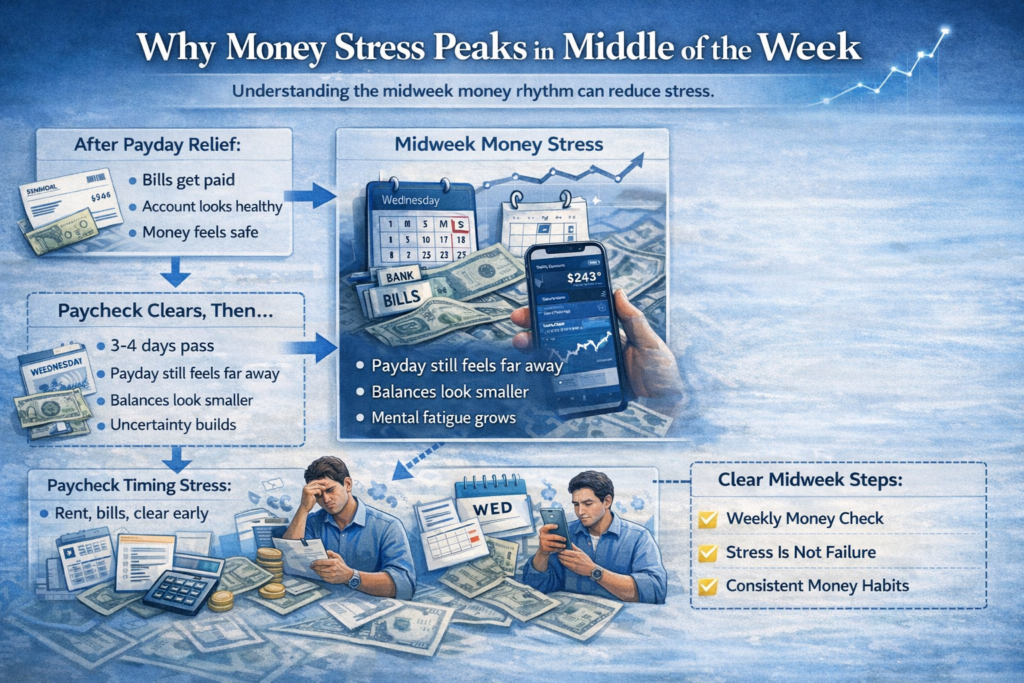
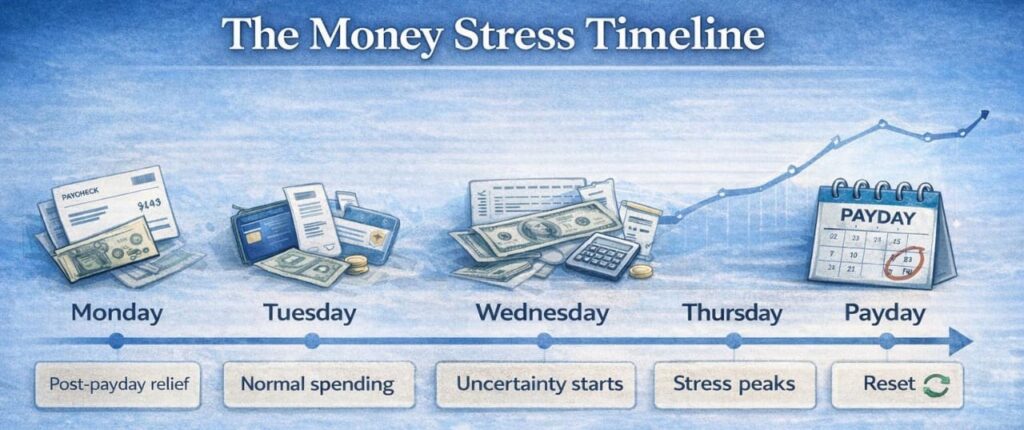
Money follows a rhythm that most people feel but rarely put into words. Right after payday, there is emotional relief. The checking account looks healthier. Spending decisions feel easier. Even people who are cautious with money notice a subtle sense of safety during this period.
As the days pass, that emotional cushion slowly fades. Groceries are purchased. Gas is filled. Automatic payments quietly clear. None of this is careless or excessive. It is normal life unfolding. Yet as money leaves and the next paycheck remains days away, money stress midweek begins to surface.
This is when many people start questioning small purchases, checking balances repeatedly, and feeling uneasy without knowing exactly why. The stress is not about the money already spent. It is about uncertainty.
Why money stress midweek is not about discipline
A common belief is that money stress midweek means a lack of discipline. People tell themselves they should have planned better or spent less. This belief creates shame and confusion, turning a timing problem into a personal flaw.
Money stress midweek affects people who budget carefully and people who earn enough on paper. The issue is not behavior. The issue is that expenses tend to arrive earlier in the pay cycle while income arrives later.
When money leaves before it arrives, the brain fills the gap with worry. That response is not weakness. It is how humans respond to uncertainty.
This article is for people with steady or predictable income who still feel anxious about money in the middle of the week. It may not be helpful for those dealing with active debt emergencies or highly irregular income, where different financial strategies are needed.
Here is the part most people miss.
Paycheck timing as the real driver of money stress midweek
Money stress midweek is one of the clearest signs of paycheck timing stress. This happens when rent, utilities, subscriptions, and daily expenses clear days before the next paycheck hits.
For many people, money stress midweek peaks by Wednesday afternoon, when early expenses have cleared and the next paycheck still feels far away.
When you are budgeting between paychecks, this early outflow creates a psychological gap. Even if the math works by the end of the month, the middle feels tight.
This is not a budgeting system or tracking tool. It is designed to provide clarity without turning money management into daily mental work.
Money stress midweek lives in that gap. It is the emotional response to watching money leave while income is still out of reach.
Why checking your balance makes money stress midweek worse
When money stress midweek rises, many people check their bank balance more often. This feels responsible, but it often increases anxiety.
A balance number without context does not tell you whether you are truly okay. It does not show upcoming expenses or how flexible your remaining money is. Without clarity, the brain assumes danger.
This is why checking your balance repeatedly can intensify money stress midweek rather than reduce it.
The mental load factor behind money stress midweek
Money stress midweek is amplified by mental fatigue. By Wednesday, most people have already made dozens of decisions at work and at home. Decision fatigue lowers tolerance for uncertainty.
The financial situation may not have changed, but your ability to sit with ambiguity has. This makes money stress midweek feel sharper even when nothing new has gone wrong.
A real-life example of money stress midweek
For example, a $40 grocery run can feel completely normal on Monday and suddenly stressful on Wednesday, even though the amount has not changed. What changes is the distance from your next paycheck and the number of expenses already cleared. The money is the same. The emotional context is not.
What the data shows
According to the Federal Reserve, nearly 37 percent of U.S. adults would struggle to cover a $400 emergency expense without borrowing or selling something. When early expenses collide with fixed pay schedules, financial stress naturally concentrates in the middle of the week.
Source: Federal Reserve – Economic Well-Being of U.S. Households
If this explanation resonates, consider saving this page to revisit the next time the middle of the week feels financially heavy.
Why weekly systems reduce money stress midweek
Traditional financial advice focuses on monthly budgets. Real life operates weekly. Groceries, fuel, and daily expenses happen every week.
This is why a weekly money check reduces money stress midweek. It creates regular clarity instead of constant guessing.
When you know where you stand for the week, uncertainty fades.
A simple tool that supports weekly clarity
Some people find it easier to stay consistent with a weekly money check when everything lives in one place.
If that sounds helpful, the
Daily Life Financial Planner – Complete Financial Management Bundle
is designed to support calm weekly reviews without turning money into a full-time job.
The role of a checking account buffer
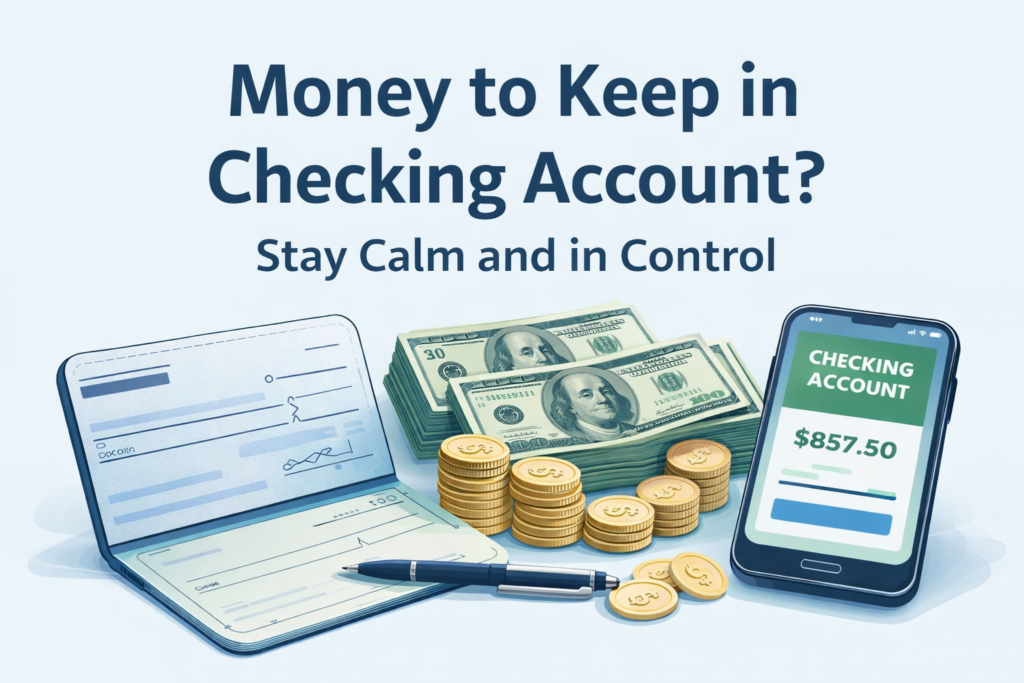
A modest checking account buffer can significantly reduce money stress midweek. This buffer is not about saving more. It is about emotional breathing room.
Understanding the right amount of money to keep in checking account helps everyday spending feel safer throughout the week.
Who this helps and who it doesn’t
This explanation helps people with steady or semi-steady income who feel pressure building as the week progresses, even when they are budgeting and paying bills on time.
If your income is highly irregular or seasonal, this pattern may show up differently, but the timing stress is still worth understanding.
Frequently Asked Questions
Why does money stress midweek feel worse?
Money stress midweek feels worse because expenses have already cleared while the next paycheck is still days away.
Does money stress midweek mean I am failing financially?
No. Money stress midweek is usually caused by timing and mental load, not failure or poor habits.
Can simple systems reduce money stress midweek?
Yes. Weekly systems reduce uncertainty, which is the main driver of money stress midweek.
Quick Check
When do you usually feel the most money stress during the week?
- Monday or Tuesday
- Wednesday
- Thursday
- Right before payday
If you are comfortable, share your answer in the comments and what usually triggers it.
When money stress midweek is viewed through timing, mental load, and uncertainty, the pattern becomes clear. The stress is predictable, explainable, and not a personal failure.
Final thoughts on money stress midweek
Money stress midweek is not a personal weakness. It is a predictable response to timing, uncertainty, and mental fatigue.
When you understand why it happens and build systems that respect real life, stress fades naturally.
Calm does not come from perfection. It comes from clarity.
You do not need to fix everything at once. Understanding what is happening is often enough to make the week feel lighter.


Pingback: 7 Ways Checking Account Anxiety Makes Spending Worse
Pingback: 7 Reasons Paycheck Timing Stress Matters More Than Income
Pingback: 7 Powerful Reasons Low Checking Balance Anxiety Makes Stable Earners Feel Broke
Pingback: 7 Emotional Reasons a Weekly Money Check Feels So Hard
Pingback: 7 Reasons Midweek Money Stress Makes Wednesdays Feel Financially Risky
Pingback: 7 Things That Change When You Do a Weekly Money Check After a Bad Spending Week