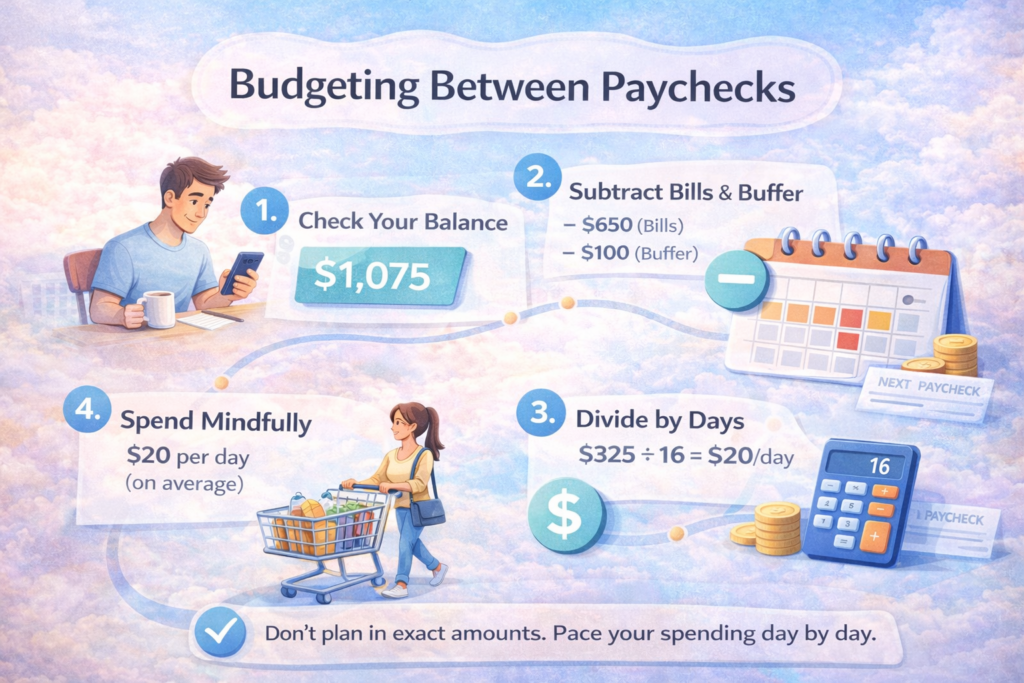
Budgeting between paychecks is where money stress usually lives. Not at the start of the month when motivation is high. Not when you sit down to make a plan or promise yourself things will be different this time. The stress shows up in the quiet days between paydays, when bills are already paid, groceries still need to happen, and your balance feels tighter than you expected.
These are the days that do not get talked about enough. The days when there is no big emergency, nothing dramatic happened, yet money still feels heavy. It is the space between paychecks where small decisions suddenly feel big and where every purchase feels like it needs justification.
If you have ever opened your banking app late at night and felt that familiar knot in your stomach, this article is for you. That moment of hesitation before you refresh the screen. That quiet hope that the number will look a little better than you remember. That is not carelessness. That is stress created by timing.
This is not about being irresponsible or bad with money. It is about how money moves. It is about timing. And most budgeting advice completely ignores that reality.
What Budgeting Between Paychecks Really Means
Budgeting between paychecks is not traditional budgeting. It does not require spreadsheets, complicated rules, color-coded categories, or extreme discipline that only works for a few weeks.
Instead, it focuses on the most important part of real-life money management: what happens after you get paid and before you get paid again.
Budgeting between paychecks simply looks at how money flows between those two moments. It asks practical questions instead of ideal ones. It pays attention to timing instead of perfection.
Your paycheck arrives on one date. Your rent, utilities, subscriptions, groceries, and daily spending leave on other dates. When those timelines do not line up, stress appears even if you earn enough overall.
This is why budgeting between paychecks matters more than monthly budgeting for most people. Monthly plans look good on paper, but daily cash flow is what determines how calm or stressful your financial life actually feels.
Why Budgeting Between Paychecks Feels So Hard
Most financial advice is built around monthly budgets. The assumption is that once money is assigned at the beginning of the month, everything will work out smoothly.
Real life does not work that way.
Gas prices fluctuate. Groceries cost more than expected. School expenses, medical copays, and small emergencies show up without warning. None of these wait for payday.
According to the Federal Reserve, more than one third of Americans would struggle to cover a small emergency expense. This is not because people are reckless or unmotivated. It is because many households live with very little margin between paychecks.
When timing goes wrong, stress builds quietly. There is no single moment where things fall apart. Instead, it is a slow pressure that grows until money starts to feel overwhelming.
Budgeting Between Paychecks Starts With One Question
Instead of asking, “How much do I have this month?” ask a simpler and more useful question:
What must be paid before my next paycheck?
This single question changes everything because it shifts your focus away from abstract plans and toward real obligations.
It moves budgeting out of theory and into reality. It helps you see what actually matters right now instead of worrying about everything at once.
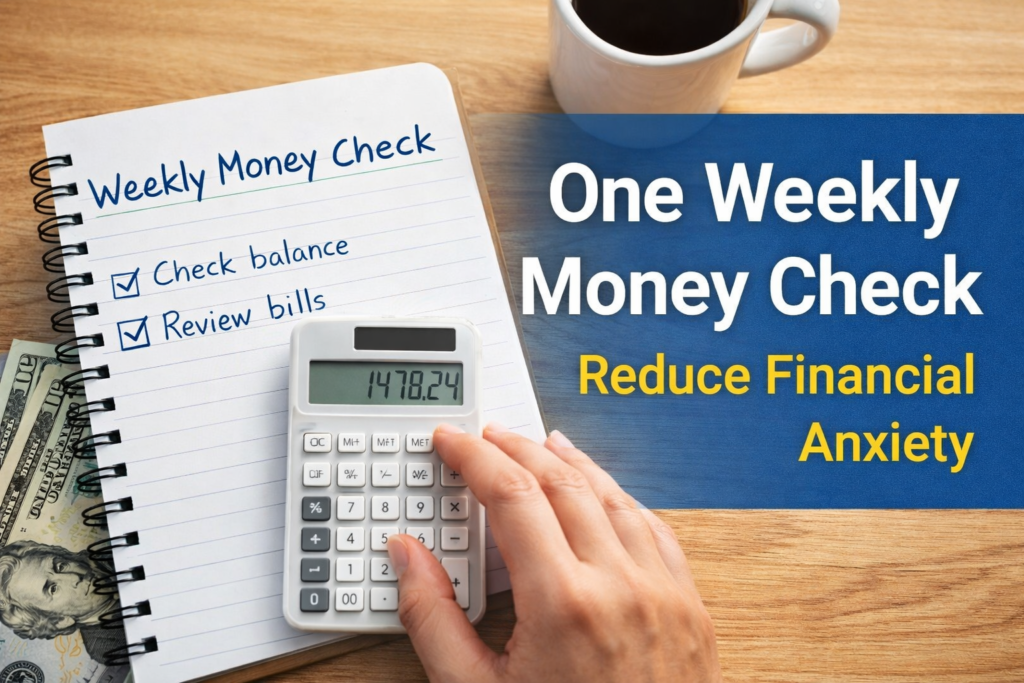
This idea is part of a broader system explained in a weekly money check that finally makes money feel manageable , which shows how a simple weekly habit can reduce money stress without budgeting overload.
1. List Only What Must Be Paid Before Payday
When budgeting between paychecks, clarity is more powerful than detail.
Write down only the expenses that must happen before your next paycheck arrives. Not everything you might spend. Not things that would be nice to buy. Only what is required.
This usually includes rent, utilities, groceries, gas, minimum debt payments, and required subscriptions.
By limiting the list, you reduce mental overload. You stop carrying unnecessary stress and start focusing on what truly affects your balance in the short term.
2. Use a Checking Account Buffer
A checking account buffer is one of the most powerful tools for budgeting between paychecks.
A buffer is a small amount of money that stays in your account at all times. You do not plan to spend it. You do not count it as available.
Even $100 can create noticeable relief.
This buffer absorbs early bills, delayed charges, and small surprises that would otherwise cause overdrafts or panic. It turns unpredictable timing into something manageable.
You can read a detailed explanation here: checking account buffer that helps you avoid overdrafts.
3. Treat Your Balance Lower Than It Is
If your balance shows $600 and your buffer is $100, act like you only have $500.
This small mental shift protects you without requiring constant tracking or strict rules.
It also reduces the urge to refresh your banking app throughout the day, which often increases anxiety instead of clarity.
4. Separate Required Spending From Flexible Spending
When budgeting between paychecks, not every expense carries the same weight.
Some expenses must happen before payday. Others can wait a few days without serious consequences.
Separating required spending from flexible spending helps you make calmer decisions. You stop reacting emotionally and start responding intentionally.
5. Reduce How Often You Check Your Bank Account
Constant balance checking creates anxiety and often leads to emotional spending decisions.
Set a simple rule for yourself. Check once a day or once every two days.
Trust the system you built instead of constantly questioning it.
6. Expect Imperfect Pay Periods
Some pay periods are heavier than others.
Unexpected expenses will happen. Timing will not always work in your favor.
If your buffer gets used, rebuild it slowly. Do not quit the system because of one difficult stretch.
Budgeting between paychecks is about consistency, not perfection.
7. Use Simple Tools to Stay Consistent
Many people struggle with money not because they lack knowledge, but because they lack structure that fits real life.
Simple written systems reduce decision fatigue and help you stay consistent even when life gets busy.
Daily Life Financial Planner – Complete Financial Management Bundle is designed for real situations, not ideal scenarios.
It supports budgeting between paychecks without overwhelming you or demanding perfection.
How Budgeting Between Paychecks Reduces Stress
When you manage the space between paydays, money starts to feel calmer.
NerdWallet explains that many people feel broke not because of income, but because expenses cluster before payday.
Budgeting between paychecks smooths those pressure points and gives you back a sense of control.
Final Thoughts
If budgeting has always felt exhausting, the problem was never you.
It was the system you were told to follow.
Budgeting between paychecks works because it matches how money actually moves in real life.
You are not behind. You are building something realistic, sustainable, and calm.


Pingback: 7 Reasons Low Checking Balance Anxiety Makes People With Money Feel Broke
Pingback: 7 Reasons Skipping a Weekly Money Check Makes Money Scarier
Pingback: 7 Reasons Money Stress Midweek Feels Worse Than It Should
Pingback: 1 Weekly Money Check That Stops Financial Stress